

Measure 4–6 Inches: Bridal Garter Trends for Australian Brides 2026
Yes, bridal garters are still on-trend for 2026, led by pearlcore embellishment, heirloom lace revivals, and minimalist satin bands. Brides are treating the garter as a genuine style statement rather than an afterthought, choosing pieces that photograph well and coordinate with their gown’s era and formality. The practical side matters just as much: fit, comfort, and where to buy a piece that suits your body and budget.
TL;DR:
- Pearl and crystal-embellished garters are trending for 2026, especially on structured gowns where texture enhances the overall look.
- Heirloom lace garters pair well with traditional wedding dresses, offering a vintage touch without exact replication of older styles.
- Choosing the right fit is critical; measure thighs accurately and test the garter in motion to prevent slipping during the day.
- Brides now typically buy two garters, one for keepsake purposes with heavier embellishment and a simpler one for tossing.
- Customization, especially for plus-size brides, requires confirming adjustable elastic bands and lead times that suit your wedding schedule.
Table of Contents
- Top bridal garter trends for 2026
- Styles, materials and embellishments to consider
- How to choose the right garter: measuring and fit checks
- Keepsake, toss garters and modern alternatives
- Practical buying checklist: price, lead times and custom options
- Why trust The Wedding Garter: catalogue, guides and Australian expertise
- Editor’s note: tasteful approaches to including a garter in 2026
- Shop the look: recommended pieces and ordering tips
- Sources
- FAQ
Top bridal garter trends for 2026
Garter styles this year split into a handful of clear directions, each suited to a different kind of wedding.
- Pearlcore and embellished bands. Clusters of freshwater pearls, seed pearls, and crystal detailing dominate 2026 collections, echoing the wider pearlcore movement in bridal jewellery. These bands work best on structured gowns where the extra texture reads as intentional, not fussy.
- Heirloom lace revival. Vintage-style Chantilly or Alençon lace garters pair naturally with classic ballgowns and tea-length dresses, giving a nod to tradition without duplicating your grandmother’s exact style.
- Minimalist satin and elastic bands. Sleek, low-profile bands suit fitted mermaid or sheath silhouettes where bulk under the dress would show through the fabric.
- Boho textures. Feathers, soft tulle, and floral appliqué continue to suit relaxed, outdoor, or barn-style receptions where the whole look leans informal.
- Sustainable and handmade pieces. More brides are asking about small-batch or handmade garters, often reusing family lace or requesting natural fibres over synthetic trims.
Easy Weddings notes that garters remain a popular but optional tradition rather than a compulsory inclusion, which is part of why the style range has widened. Brides feel freer to pick a garter that suits their personality instead of defaulting to a generic white lace band. For a deeper look at how these looks translate into finished products, The Wedding Garter’s own modern garter style guide breaks down each trend with real examples.
Styles, materials and embellishments to consider
The fabric you choose changes how a garter looks, feels, and holds up through a full day of wear.
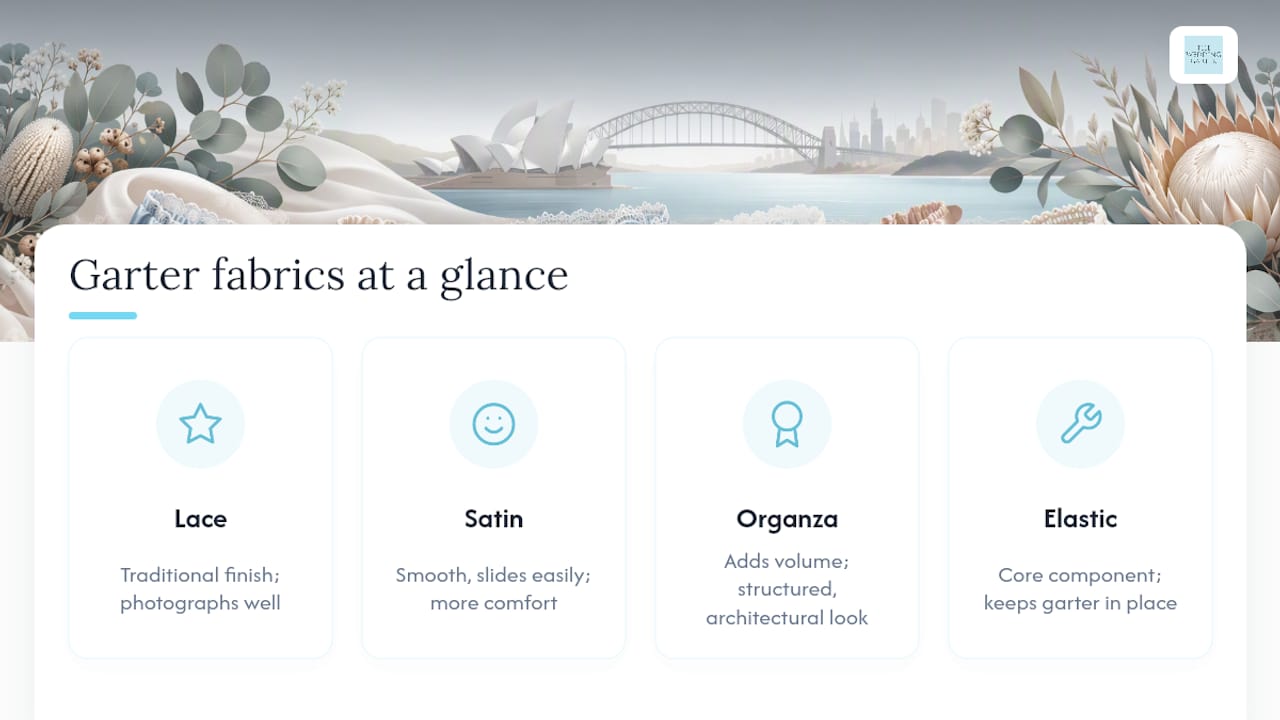
Lace gives the most traditional finish and photographs beautifully in close-up shots, but it can feel stiffer against skin than satin. Satin sits smoother and slides on easily, which suits brides who want comfort over decoration. Organza adds volume and a slightly structured, almost architectural look, often used for the bow or overlay rather than the base band. Elastic remains the practical core of nearly every garter, regardless of the outer fabric, because it is what keeps the piece in place.
Embellishment changes both weight and price. A hand-beaded pearl cluster or crystal motif adds noticeable weight to a garter, which some brides notice by the end of a long reception, and it raises the price compared to a plain band. Colour still plays into the “something blue” tradition, with many brides tucking a small blue ribbon or bow into an otherwise ivory or white garter. The Wedding Garter’s guide to something blue accessories covers subtler ways to work the colour in without it dominating the piece.
Plus-size brides should look for garters built with wider elastic bands and adjustable closures rather than a single fixed loop, since a stretch-only design can dig in or slip depending on thigh shape.
How to choose the right garter: measuring and fit checks
Getting the fit right matters more than the style you pick, because even the prettiest garter is a problem if it slides down mid-reception.
- Measure thigh circumference at the point you plan to wear the garter, usually four to six inches above the knee, using a soft tape measure pulled snug but not tight.
- Try the garter on with your actual gown or similar undergarments, not bare-legged, since fabric layers change how the band sits.
- Test it in motion. Sit down, stand up, walk a few steps, and do a small dance turn before deciding it fits.
- Check for silicone lining or grip strips inside the band, which hold position far more reliably than tension alone.
- Pair with the right stockings or hosiery so the garter has something to grip against rather than bare, moisturised skin.
Pro Tip: Placing the garter slightly higher on the thigh than feels natural in the mirror often keeps it more secure once you’re standing and dancing for hours.
The Wedding Garter’s own measurement guide walks through each measuring point in more detail if you want to double check before ordering.
Keepsake, toss garters and modern alternatives
Most brides now buy two garters rather than one, splitting the roles between what you keep and what you throw.
- The keepsake garter tends to carry the heavier embellishment, since it stays with you for decades rather than flying across a dance floor.
- The toss garter is usually simpler and cheaper, built to be thrown without regret if it’s lost or damaged.
- Preservation options include a small display box, a sewn pouch tucked into your wedding album, or a custom frame alongside other keepsakes.
- Skipping the toss entirely is increasingly common; some couples do a private exchange instead, or drop the ritual altogether without anyone noticing.
The Knot’s editorial coverage backs this two-piece approach as the practical compromise between tradition and keepsake value, and it’s the same logic The Wedding Garter’s own keepsake and toss alternatives guide works through in more detail.
Practical buying checklist: price, lead times and custom options
Before you commit to a garter, run through a short list of questions with the maker or retailer.
- Confirm sizing options and whether the band is adjustable or fixed.
- Ask about lead time, especially for custom or hand-beaded pieces, which can take longer than off-the-shelf stock.
- Check the return policy, particularly for made-to-order items that can’t usually be resold.
- Ask what the band and lace are made from, and whether it’s hand-washable or spot-clean only.
Price ranges vary widely depending on complexity. A simple satin or elastic band sits at the lower end, while hand beading, crystal clusters, or bespoke sizing push costs up. Bespoke makes sense if you have an unusual thigh measurement, want matching family heirloom lace, or need a colour that off-the-shelf ranges don’t stock. Plus-size buyers should confirm the maker offers extended sizing rather than assuming a “one size stretches to fit” band will actually sit comfortably, a point covered directly in the plus-size buying guide.
Why trust The Wedding Garter: catalogue, guides and Australian expertise
The Wedding Garter offers handmade bridal garters alongside bridal jewellery, hairpieces, and luxury bridal lingerie. Every guide referenced through this article, from measurement steps to plus-size fitting, aligns with common bridal accessory practices.
For brides building a full pearlcore or heirloom-lace look, the Organza Floral Ivory Pearl & Crystal Bridal Crown shows how the same pearl and crystal detailing trending in garters carries through to hair accessories, letting you coordinate pieces rather than buy them in isolation.

Editor’s note: tasteful approaches to including a garter in 2026
There’s no rule that says you owe your guests a toss. Save it for a casual reception where the crowd will lean in, and skip it or keep it private at a formal, seated affair where it might feel out of step. Treat the garter the same way you’d treat any other accessory on your body that day: pick what feels like you, not what tradition assumes you want.
— The Wedding Garter
Shop the look: recommended pieces and ordering tips
There are plenty of places to browse garter inspiration, but buying from a maker who actually builds the pieces means every measurement question gets a real answer, not a guess. The Wedding Garter’s handmade garters are built to order, with custom pieces typically needing more lead time than off-the-shelf stock, so it pays to order ahead of your dress fittings rather than in the final weeks before the wedding.
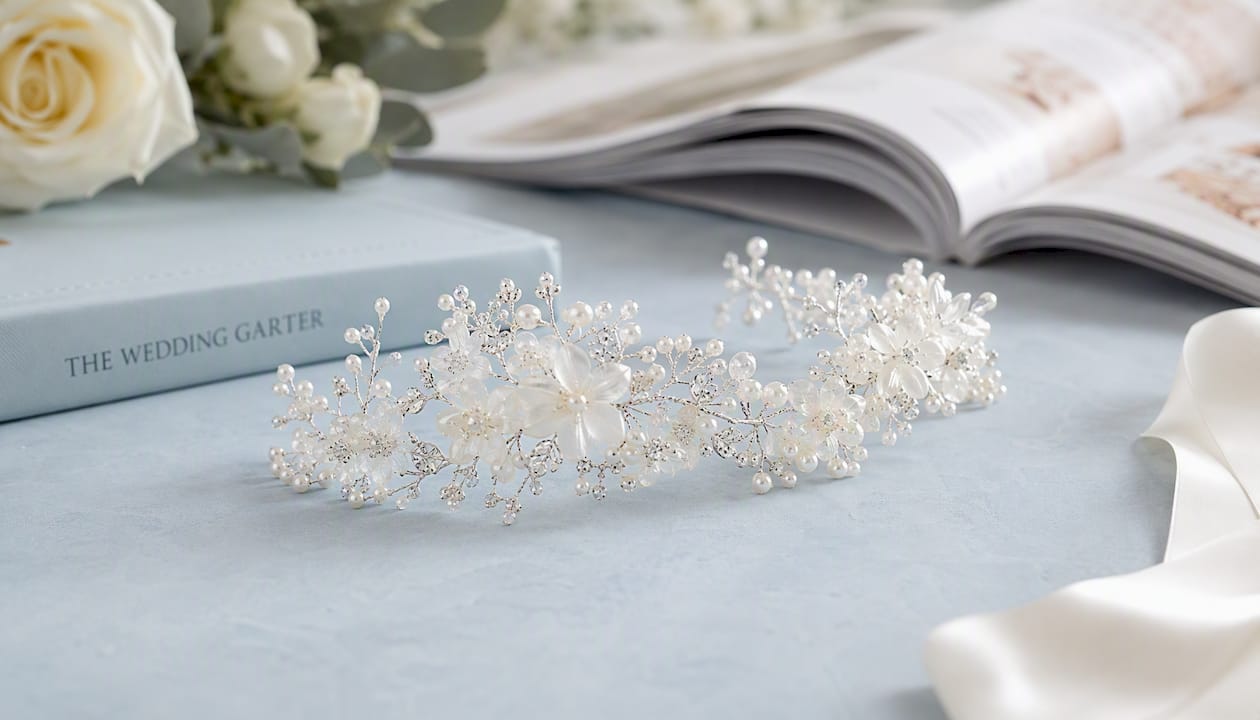
If you’re building a coordinated pearlcore or heirloom look, start with the Organza Floral Ivory Pearl & Crystal Bridal Crown as your anchor piece, then match a garter to the same pearl and crystal tone. For broader inspiration on coordinating wedding accessories as a set, this overview of wedding accessory trends is a useful reference point. Browse the full range at The Wedding Garter and get your measurements sorted early so your custom order arrives with time to spare.
Sources
For measuring, plus-size fit, and keepsake ideas, see The Wedding Garter’s own guides linked throughout this article. For general tradition and wearing advice, Easy Weddings and The Knot both offer useful editorial context on garter etiquette and styling.
- Bridal garters - tradition, trends and how to wear
- 26 Wedding Garters & Bridal Garter Sets Too Sexy to Toss
FAQ
What are the bridal fashion trends for 2026?
Pearlcore embellishment, heirloom lace revivals, and minimalist satin bands are the standout garter trends, echoing a broader bridal shift toward personalised, texture-rich accessories.
Are brides still wearing garters?
Yes, though Easy Weddings frames it as an optional tradition rather than a requirement, with many brides choosing a two-piece keepsake-and-toss set instead of a single garter.
What colour garter should a bride wear?
Ivory or white remains most common, often with a small blue ribbon or accent worked in to satisfy the “something blue” tradition without changing the overall look.
Are wedding garters and garter belts the same thing?
No. The Knot recommends searching for a wedding garter or “leg garter” specifically, since a garter belt is a different lingerie item entirely and won’t sit the same way on the leg.


