

Do brides still wear garters? A 2026 guide
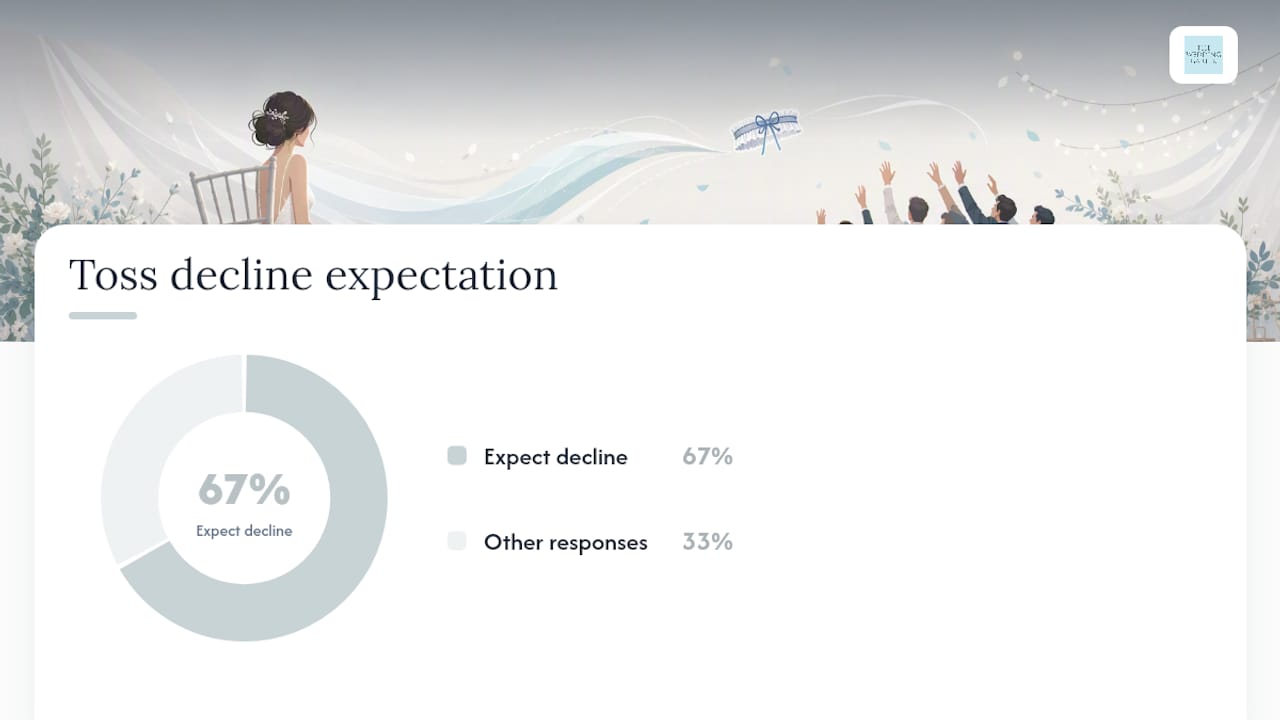
Yes, brides still wear garters. The tradition is very much alive, though it looks different from the mid-century ritual most people picture. Most modern brides choose a garter as a personal, optional accessory rather than a centrepiece of the reception. The garter toss, however, is a separate matter: polling reported by NewsNation found that 67% of engaged couples expect the bouquet and garter toss to drop off by 2026.
Three common choices for brides today:
- Wear it all day as a sentimental keepsake, then keep it after the wedding
- Wear it for a private moment with their partner on the wedding night
- Skip the public toss entirely while still wearing a decorative garter under the dress
Pro Tip: If you love the idea of a garter but dread the toss, you do not have to choose between them. Wear a beautiful keepsake garter all day, and simply leave the toss off the run sheet.
Key takeaways
Table of Contents
- Do brides still wear garters? A brief history explains why
- How common is the garter tradition in 2026?
- How couples are adapting the garter tradition today
- How to wear a garter: fit, placement and styling
- Who buys the garter, and when should you order?
- Etiquette, consent and when to skip the toss
- Where to buy bridal garters in Australia
- The Wedding Garter’s view on modernising the tradition
- Bridal garters and accessories from The Wedding Garter Australia
- Sources
- FAQ
Do brides still wear garters? A brief history explains why
A garter is a band worn around the thigh or just below the knee to hold stockings in place. That was its original, entirely practical function. According to Wikipedia), garters were worn across sexes for centuries before becoming a specifically feminine and eventually bridal accessory.
The wedding ritual developed gradually:
- Medieval period: Guests would rush the bride after the ceremony to grab a piece of her dress or stockings for luck. The garter became a controlled substitute.
- 17th–19th century: The garter was tossed to the crowd as a way of managing that chaos, and it became associated with good fortune for whoever caught it.
- Mid-20th century: Bridal retail and reception culture in the United States formalised the toss into a standard reception segment. Vogue’s reporting on the garter toss notes how marketing and mid-century bridal retail helped popularise the ritual and embed it in mainstream wedding culture.
- Late 20th century onward: Pantyhose replaced stockings, removing the garter’s functional purpose entirely. It became purely symbolic.
The “something blue” connection is one reason the garter persisted after stockings disappeared. A blue garter neatly satisfies the old wedding rhyme, giving the accessory a new sentimental role once its practical one was gone. The Knot explains that brides commonly use a single decorative garter as their “something blue” and may buy a separate, less precious garter purely for the toss.
How common is the garter tradition in 2026?
The short answer: wearing a garter is still common; tossing it is not.
A Knot poll reported by NewsNation found that 67% of engaged couples expect the bouquet and garter toss to drop off by 2026, placing it among the wedding traditions most likely to disappear from reception programmes. Editorial outlets including Vogue and Brides have covered the same shift, framing the toss as increasingly out of step with modern sensibilities while noting that the garter as a wearable accessory remains popular.
Some industry sources suggest that a large proportion of brides still purchase a decorative garter even when they have no intention of tossing it, though that figure comes from retailer and industry reporting rather than a formal academic poll. WeddingWire community forums reflect the same pattern anecdotally: brides report buying garters for sentimental or aesthetic reasons, with the toss treated as entirely optional.
In Australia, the garter toss was never as deeply embedded as it is in American wedding culture. UK and broader Western guidance confirms the toss is less common outside the United States, and Australian weddings follow a similar pattern. Wearing a garter, however, is well established here as a bridal accessory choice.
Pro Tip: Poll numbers reflect stated intentions, not actual behaviour. The real figure for how many brides wear a garter is likely higher than toss statistics suggest, because many brides wear one privately without it ever appearing in reception footage.
Key signals from editorial and poll coverage:
- The toss is declining fastest among younger couples and urban weddings
- Wearing a garter privately or as a keepsake is growing as a preference
- Brides magazine frames wearing, saving, or skipping a garter as equally valid modern choices
How couples are adapting the garter tradition today
The tradition is flexible. Couples are finding ways to keep the symbolism while dropping the elements that feel uncomfortable or dated. Common modern variations include:
- Keepsake garter: Worn under the dress all day, then kept as a memento. Often personalised with embroidery, a wedding date, or a charm.
- Separate toss garter: A less expensive, plain garter bought specifically for the toss, so the bride’s keepsake garter stays intact. This is a practical tip Brides recommends for couples who want both the ritual and the sentiment.
- Private removal: The garter is removed by the partner in a private moment rather than in front of guests. This suits couples who find the public element uncomfortable.
- Symbolic token toss: The garter is tossed to a small group of close friends rather than the entire single male guest list, reducing pressure and awkwardness.
- Hand it over: The bride presents the garter directly to the partner as a gift, skipping the crowd entirely.
The garter toss works best when everyone in the room is genuinely comfortable with it. A moment that feels forced or embarrassing for any guest or for the couple themselves is not worth keeping on the run sheet. The tradition has always been about celebration, not obligation.
Consent and guest comfort matter here. If the reception includes children, elderly relatives, or guests from cultural backgrounds where the ritual would feel inappropriate, skipping or adapting the toss is the considerate choice. Talk to your MC or wedding band or DJ in advance so the moment is handled smoothly, or simply removed from the programme without announcement.
For keepsake ideas and toss alternatives, there are many creative options that preserve the sentiment without the public performance.
How to wear a garter: fit, placement and styling
Getting the fit right makes the difference between a garter that stays put all day and one that slides down by the ceremony’s end.
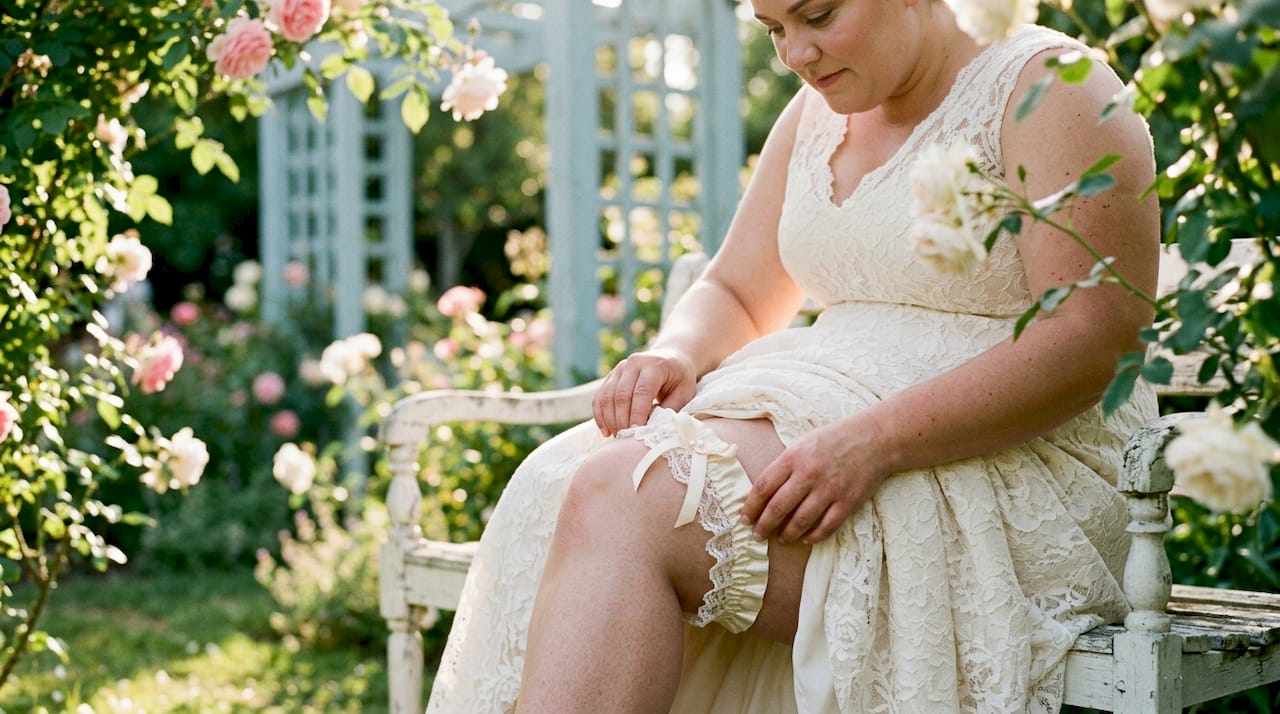
- Placement: The upper thigh, roughly a hand’s width above the knee, is the standard position. This keeps the garter hidden under most dress silhouettes and sits comfortably without restricting movement. For a full guide on which leg to wear your garter on, tradition suggests the left leg, though there is no rule.
- Single vs set: A set of two garters (one keepsake, one toss) is practical if you plan to toss. A single decorative garter is sufficient if you are wearing it for sentiment or photos only.
- Fabric: Lace and satin are the most common choices. Lace suits vintage and romantic aesthetics; satin works with modern and minimalist looks. Elastic-backed options with a silicone non-slip strip are the most secure for long wear.
- Measuring: Measure the circumference of your upper thigh and add roughly 2–3 cm for comfort. Most garters have stretch, but a correct base measurement prevents both slipping and discomfort. A full measuring guide covers this step by step.
- Shapewear compatibility: If you plan to wear shapewear or a slip under your dress, try the garter over it during a fitting. Some shapewear waistbands sit at the thigh and can interfere with garter placement.
- Styling as “something blue”: A blue garter, such as the Greta White & Blue Satin Bridal Garter, satisfies the “something blue” tradition while doubling as a wearable accessory. Coordinate the colour with your bridal lingerie or jewellery for a cohesive look.
Pro Tip: Put the garter on before the dress, not after. Sliding it up over a full gown risks snagging delicate fabric. Dress over the garter is always the correct order.
For brides who need extended sizing, a dedicated plus-size garter guide covers fit, stretch, and non-slip options specifically.
Who buys the garter, and when should you order?
Traditionally, the garter was a gift from the groom or the bride’s family. Today, the bride most commonly buys her own, though it remains a popular gift from bridesmaids, a mother, or a partner.
Common gifting patterns:
- Bride purchases her own: Most common, especially for custom or personalised garters where fit and style are personal decisions.
- Partner gifts it: A sentimental option, often chosen as a surprise for the wedding morning.
- Bridesmaid or family gift: Works well for a standard decorative garter; less practical for custom sizing.
Timing for Australian brides:
- Standard garters: Allow at least 2–3 weeks for online orders to arrive, accounting for shipping from Australian retailers.
- Custom or handmade garters: Order 6–8 weeks before the wedding date. Custom embroidery, specific colourways, or personalised charms all require additional production time.
- Toss garter: This can be ordered much closer to the date, as it does not need to be personalised.
Pro Tip: Order your keepsake garter and your toss garter at the same time, even if they come from different places. Running out of time on the toss garter is a common last-minute stress that is easy to avoid.
| Purchase type | Recommended lead time | Notes |
|---|---|---|
| Standard decorative garter | 2–3 weeks | Allows for standard Australian shipping |
| Custom or personalised garter | 6–8 weeks | Embroidery, charms, or specific colours need production time |
| Toss garter (plain) | 1–2 weeks | No personalisation needed; can be ordered later |
Etiquette, consent and when to skip the toss
The garter toss is the one part of the bride garter tradition that genuinely warrants a pause before including it. A few clear guidelines.
Do:
- Discuss the toss with your partner and MC before the wedding day
- Give guests a heads-up if the toss is on the programme, so no one is caught off guard
- Keep the removal brief and lighthearted if you do proceed
- Offer an alternative (a token toss, a small group, or a symbolic gesture) if the full ritual feels like too much
Do not:
- Pressure a partner to participate in a removal they are uncomfortable with
- Single out guests to catch the garter if they have not volunteered
- Include the toss if the guest list includes a significant number of children or guests from cultural backgrounds where the ritual would be unfamiliar or unwelcome
Red flags that suggest skipping the toss:
- Mixed-age crowd with young children present
- Guests from cultural or religious backgrounds where the ritual may cause discomfort
- Either partner expressing reluctance
- A venue or time of day where the energy does not suit a rowdy reception moment
Inclusive alternatives remove gender assumptions from the ritual entirely. A symbolic token toss to all guests, a garter display as a table centrepiece, or simply wearing the garter privately all achieve the same sentimental outcome without the public performance. Wedding videography planning is another place to think through which reception moments you actually want captured on film.
Where to buy bridal garters in Australia
Australian brides have three main buying channels:
- Local bridal boutiques: Allow you to try before you buy and get fit advice in person. Stock is usually limited to a small selection of standard styles; custom options are rare.
- Online Australian retailers: Wider range, faster access to custom options, and competitive pricing. Shipping within Australia is straightforward, and returns policies are generally clear.
- Custom makers: Best for fully personalised garters with specific embroidery, colours, or charms. Require the longest lead time.
The Wedding Garter Australia is an Australian online retailer based on the Gold Coast, offering handmade custom garters, bridal jewellery, and bridal lingerie. Their range includes the Satin Bridal Garter With Floral Design in 18 colour options and the Vintage Ivory Lace & Satin Bridal Garter for a classic look. Both ship within Australia.
Pro Tip: Buy your toss garter separately from your keepsake garter. A plain, inexpensive toss garter means you can keep your personalised keepsake intact, and you will not hesitate during the moment.
For a full breakdown of styles, fit, and what to look for, the ultimate wedding garters buying guide covers every major decision.
The Wedding Garter’s view on modernising the tradition
The bride garter tradition is not disappearing. It is becoming more personal. At The Wedding Garter Australia, the approach has always been that a garter should reflect the bride’s own style, not a script inherited from a 1970s reception hall. Some brides want a delicate lace keepsake they will frame after the wedding. Others want a satin garter in a bold colour that no one will ever see but them. Both are equally valid.
Custom handmade garters, bridal jewellery, and luxury bridal lingerie are all part of the same idea: that the details of a wedding day should feel chosen, not obligatory. The tradition is worth keeping when it means something. When it does not, skipping it is just as legitimate a choice.
Bridal garters and accessories from The Wedding Garter Australia
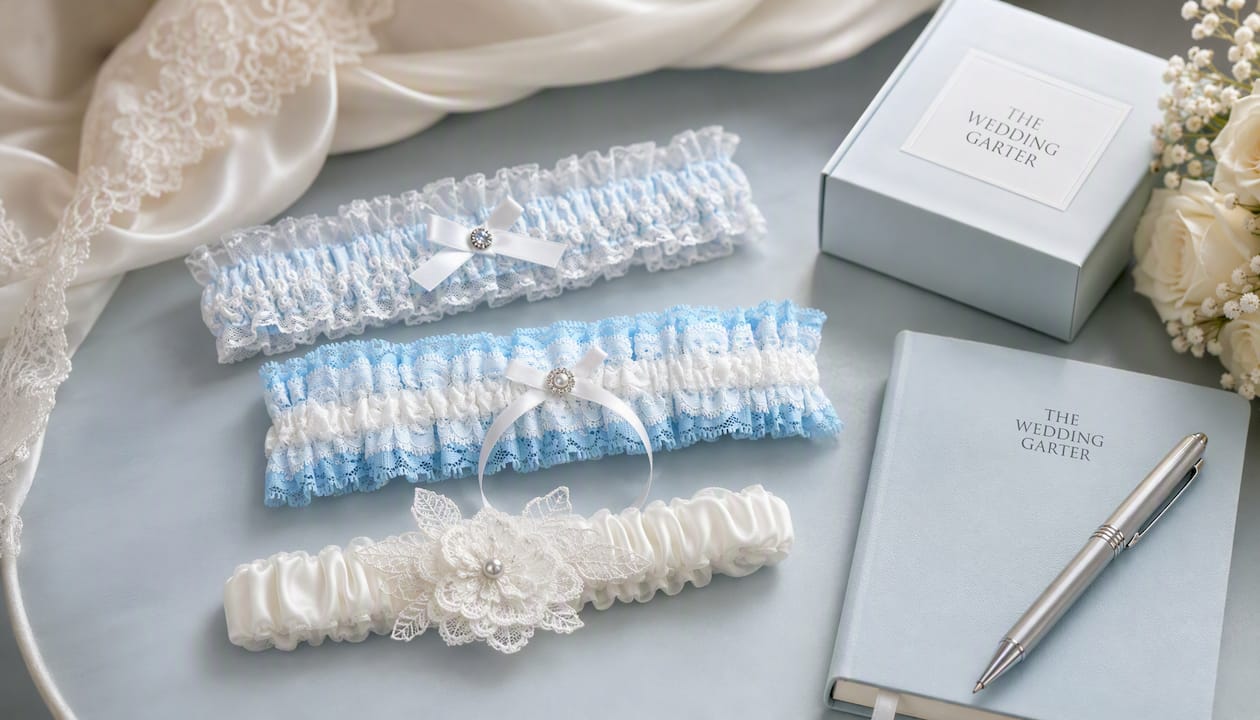
The Wedding Garter Australia offers a curated range of bridal garters, jewellery, and lingerie, all available online with Australian shipping. For brides building a complete bridal look, the Vintage Art Deco Style Bridal Jewellery Set coordinates beautifully with lace garter styles, while the Luxury White Lace Lingerie Chemise For Brides and Romantic Lace Underwire Bridal Bustier pair naturally with a garter for wedding-night styling. The Delicate Sheer Lace Bridal Bustier Lingerie, Delicate Crystal Luxury Bridal Bracelet, and Sterling Silver Cubic Zirconia Pendant Bridal Jewellery Set round out a cohesive bridal accessory collection. Custom options, complimentary gift wrapping, and Australian-based shipping make ordering straightforward. Browse the full range at The Wedding Garter Australia and place your order at least 6–8 weeks before the wedding for custom pieces.
Sources
- This wedding tradition is ‘out’ for 2026 celebrations, poll shows | NewsNation
- Wedding Garter Toss Tradition, History and Significance …
- The Garter Toss’ Actual, Untold History | Vogue
FAQ
Do modern brides wear a garter?
Yes. Many brides still wear a garter as a decorative or sentimental accessory, often as their “something blue.” Wearing, saving, or skipping a garter are all common modern choices.
Is the garter toss outdated?
It is declining. A Knot poll found that 67% of engaged couples expect the bouquet and garter toss to drop off by 2026, and editorial coverage increasingly frames the public toss as optional rather than expected.
Who buys the bride a garter?
The bride most commonly buys her own, particularly for custom or personalised styles. It is also a popular gift from a partner, bridesmaid, or family member for standard decorative garters.
When did the garter toss go out of style?
The shift has been gradual over recent decades as couples prioritised guest comfort and personal choice over inherited reception rituals. The toss was never as common in Australia as in the United States.
Recommended
- Ultimate Wedding Garters Buying Guide for Your Dream Day in 2026 - – The Wedding Garter
- What Leg Does a Bride Wear Her Garter On? The Ultimate Sweet & Simple – The Wedding Garter
- What is the Meaning of a Wedding Garter? A Bride’s Guide to This Sweet – The Wedding Garter
- The Ultimate Plus Size Wedding Garter Buying Guide: Find Your Perfect – The Wedding Garter


Leave a comment