

Mixed Metal Bridal Jewellery: 2:1:1 Playbook & Fitting Checklist
Yes, mixing metals works beautifully for bridal jewellery when it’s planned rather than accidental. The core rule is simple: pick one anchor metal to carry the most visual weight, repeat an accent metal at least once elsewhere in your set, and keep finishes consistent throughout. Read on for the exact combinations, the ring-stacking logic, and a shopping checklist that takes the guesswork out of it.
TL;DR:
- Choosing one dominant metal for most of the jewellery and repeating an accent metal elsewhere creates a deliberate, balanced mixed-metal look.
- Keep finishes consistent across pieces by matching polish or matte textures, as contrasting finishes can appear unintentional.
- Use a single solid wedding band as an anchor in the ring stack to provide a visual reference point and ensure proportional scale.
- Pair popular metal combinations like yellow and rose gold, or white gold and platinum, based on the desired contrast and overall aesthetic.
- Separating daily-wear pieces from occasional accessories and avoiding tarnishable metals like silver helps maintain jewellery’s appearance over time.
Table of Contents
- How to get a balanced mixed-metal bridal look
- Anchoring your ring stack with one solid band
- Metal pairings and combos worth trying
- Matching jewellery to your neckline and skin tone
- Caring for different metals in the same set
- Shopping checklist for your try-on appointment
- Coordinating mixed metals with your other wedding accessories
- Wearing mixed-metal bridal jewellery after the wedding
- Our styling rules for mixed-metal brides
- Pieces from our catalogue that pair well with mixed metals
- Sources
- FAQ
How to get a balanced mixed-metal bridal look
Mixed metals read as intentional when one tone clearly dominates and the others play a supporting role. Aim for most of your visible jewellery in one metal, with the remainder split between one or two accents. A gold anchor with silver earrings and a rose-gold bracelet feels curated. Three metals fighting for equal attention feels cluttered.
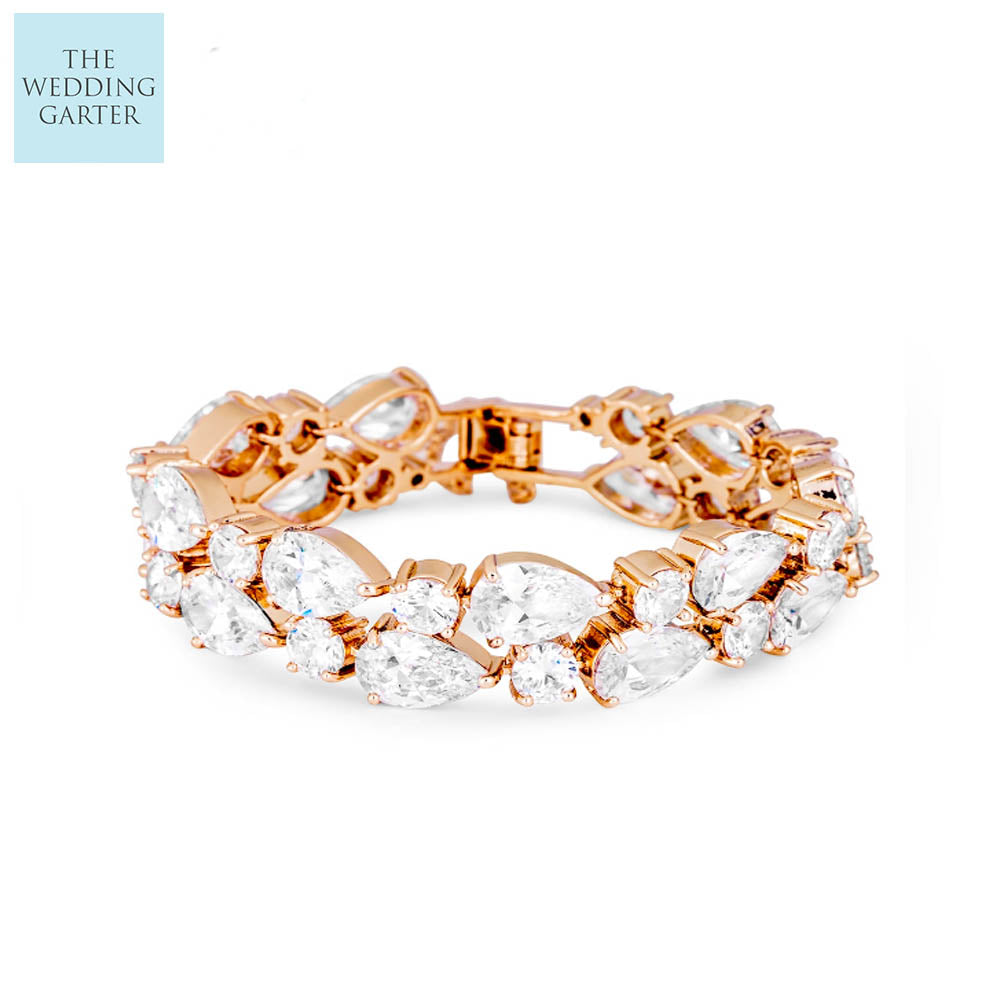
Repetition is what separates “styled” from “thrown together.” If your engagement ring has a white-gold band, echo that white tone somewhere else, whether in your earrings, a pendant, or a hair accessory. Styling guides consistently recommend echoing an accent metal at least once so the eye reads the pairing as deliberate rather than mismatched.
Finish consistency matters just as much as colour. Retail style guides advise matching polish levels across your pieces, since a high-shine polished band next to a brushed matte cuff can look unintentional even when the metal tones themselves work together. Keep everything polished, or everything matte, but don’t mix the two finishes.
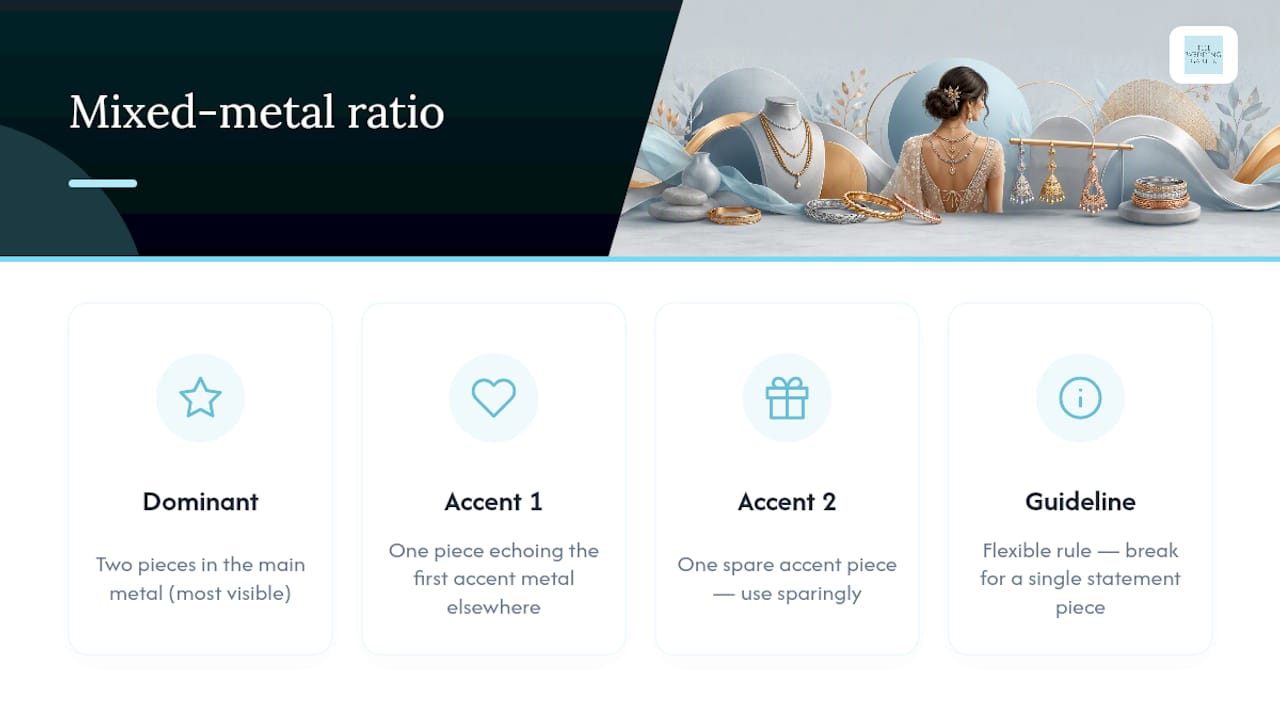
The often-cited 2:1:1 rule (two pieces in your dominant metal, one in your first accent, one in your second) is a useful starting proportion. Treat it as a guideline, not a formula. Break it when a single striking piece, like a statement pendant, should carry more visual weight than the ratio suggests.
Anchoring your ring stack with one solid band
Your ring stack gets the most scrutiny of any part of your mixed-metal look, simply because it’s photographed constantly and worn daily. The fix is straightforward: choose a single-tone, solid wedding band as your anchor, then let the engagement ring and any stackable bands play around it. Stylists commonly recommend grounding a mixed-metal stack this way, since a solid band gives the eye one steady reference point even when the ring above it mixes two or three metal tones.
Scale consistency matters here too. A chunky band paired with a delicate, thin engagement ring will look lopsided regardless of metal colour, so match width and profile as closely as the design allows.
Pro Tip: Choose platinum or 14k/18k gold for your everyday band rather than sterling silver. Both hold up to daily knocks and need far less upkeep than softer metals, which matters once the wedding day is behind you.
If you’re incorporating a family heirloom, let its metal lead the stack. Specialists suggest matching scale and repeating the heirloom’s tone somewhere else in your set, whether through earrings or a bracelet, rather than trying to disguise it. Read more on what your wedding jewellery collection should include for guidance on building around inherited pieces.
Metal pairings and combos worth trying
Certain pairings show up again and again in bridal styling because they simply work. Yellow and rose gold together create a subtle, warm two-tone effect, while white gold or platinum against yellow gold gives you sharper, more visible contrast. Tri-tone stacks that use all three are increasingly common for brides who want their ring to double as a statement piece.
Here are eight combinations to test, either in-store or by holding pieces side by side at home:
- Yellow gold anchor + rose gold accent. Warm and understated, suits vintage-leaning gowns and warmer skin tones.
- White gold anchor + yellow gold accent. Crisp contrast, works well with modern minimalist dress silhouettes.
- Platinum anchor + rose gold accent. Cool base with a soft warm highlight, flattering on most skin tones.
- Rose gold anchor + silver accent earrings. Romantic and soft, best for occasional pieces rather than the daily band.
- Yellow gold anchor + white gold and rose gold accents (tri-tone). Bold and layered, suited to brides who want a statement stack.
- Platinum anchor + yellow gold repeated in earrings and bracelet. Balanced formal look for classic ceremonies.
- White gold anchor + silver hair accessory. Cohesive cool-toned look, good for evening receptions under warm lighting.
- Rose gold anchor + yellow gold heirloom piece. A practical way to fold in a family ring without clashing.
Reserve silver for occasional or evening pieces rather than your wedding band. Platinum and solid gold handle daily wear far better and won’t need the frequent re-polishing silver demands.
Matching jewellery to your neckline and skin tone
Your neckline decides where the eye lands, so let it guide which mixed-metal pieces you emphasise. A strapless or sweetheart neckline draws attention to a statement necklace or collarbone-length pendant, so that’s where you want your dominant metal visible. A high neckline shifts the focus to earrings and hairpieces instead, making those the better place to repeat your accent metal. V-necklines suit a pendant that follows the line down, echoing whichever metal anchors your ring stack.
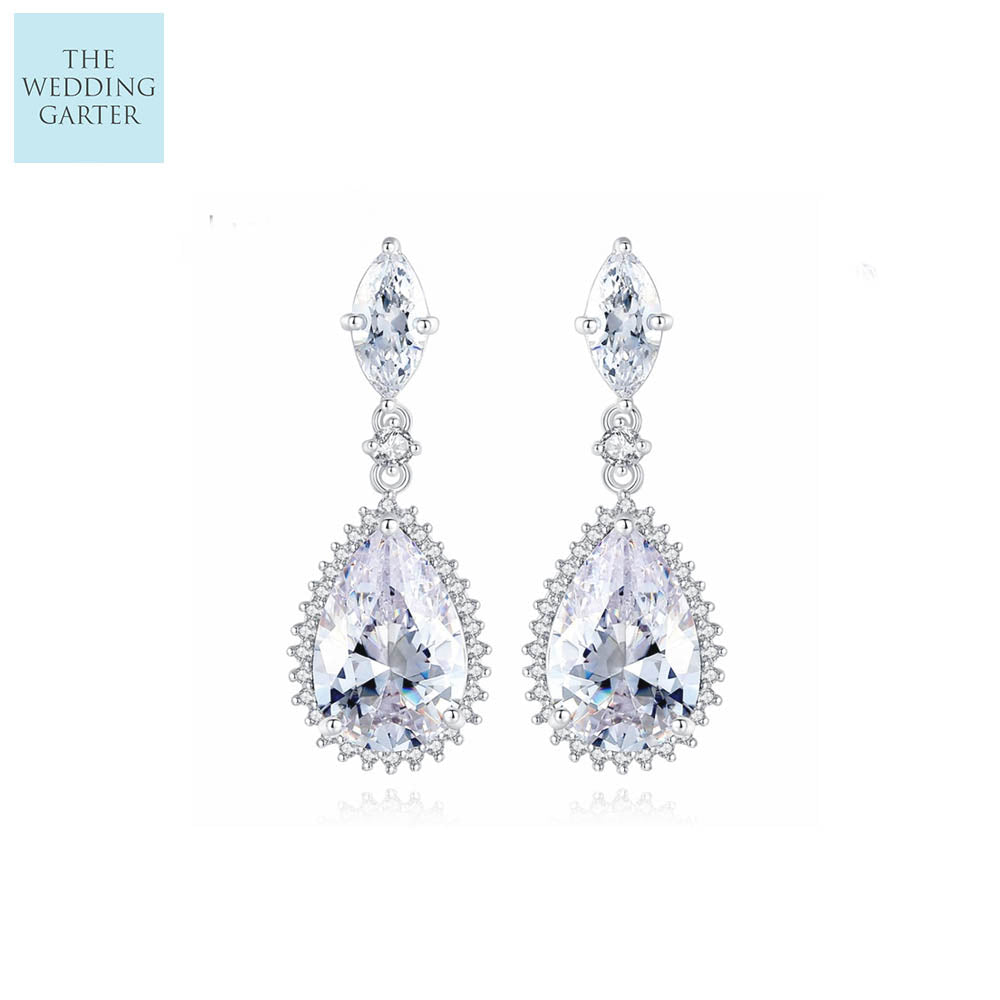
Skin undertone is a helpful prompt rather than a rule. Warmer undertones often suit yellow and rose gold, while cooler undertones tend to favour white gold, platinum, and silver, but plenty of brides mix warm and cool tones successfully by leaning on the anchor-and-accent approach instead. Check which bridal earring styles suit your neckline before deciding where to place your strongest metal. Keep an eye on your gown’s own detailing too. A heavily beaded bodice needs quieter jewellery, while a simple silhouette can carry more metal without competing for attention in photos.
Caring for different metals in the same set
Each metal in a mixed set ages differently, so your care routine needs to match. Platinum is the lowest-maintenance option and mostly needs occasional polishing to restore its shine. White gold relies on a rhodium coating that wears down over time, so expect to have it replated roughly every one to two years depending on how often you wear it. Yellow and rose gold need only gentle cleaning with mild soap and a soft cloth. Silver tarnishes fastest of the group, which is why it suits occasional pieces better than a daily-wear band.
Avoid chlorine, hand sanitiser, and heavy lotions on any metal, since these accelerate discolouration and dull polished surfaces. Take rings off before swimming or cleaning. Book a professional polish or replating appointment when you notice a yellow cast creeping through white gold, or when a once-sharp finish starts looking flat.
Shopping checklist for your try-on appointment
Bring your engagement ring and any heirloom pieces to every fitting, since seeing them alongside new pieces is the only reliable way to judge a mixed-metal combination. Photograph every stack in daylight, from the angles your photographer will actually use, because metal tones shift dramatically under different lighting.
Ask your jeweller about alloy composition, plating thickness, resizing options, and repair policies before you commit. Request they hold pieces side by side so you can compare finishes in real time rather than relying on memory between appointments.
- Accent metal repeated somewhere in the set
- Comfortable fit across all stacked rings
- Visual scale matched between pieces
- Finish consistent (all polished or all matte)
- Daily-wear durability confirmed for the band
- Total cost and warranty or service terms understood
Coordinating mixed metals with your other wedding accessories
Your jewellery doesn’t exist in isolation. A mixed-metal ring stack needs to sit comfortably alongside your hairpiece, belt, and any other metallic accents in your bridal look, or the overall effect starts to feel disjointed rather than layered.
Start with your hairpiece. If it features silver or crystal detailing, that’s your cue to repeat a cooler metal somewhere in your jewellery, whether that’s white-gold earrings or a platinum pendant. An ivory-and-silver headpiece pairs naturally with a white-gold or platinum-anchored stack, while a gold-toned comb or vine calls for warmer accents below the neckline.
Belts and sashes with metallic thread or beading work the same way. Match the dominant tone in the belt to your jewellery’s anchor metal rather than introducing a third competing colour at the waist. If your belt mixes gold and silver detailing already, treat it as permission to lean into a tri-tone jewellery approach rather than fighting it.
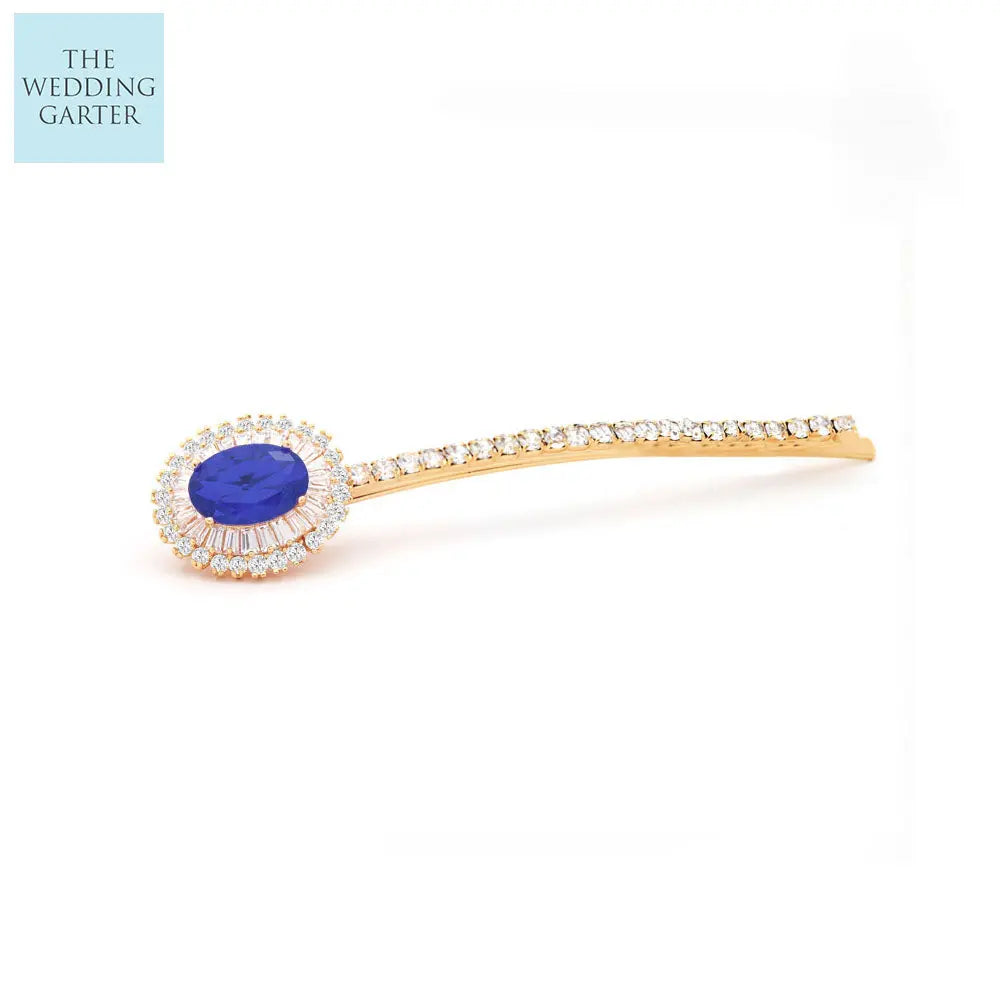
Bouquet jewellery, like a wrapped stem or charm, should echo whatever accent metal you’ve already repeated elsewhere. Consistency across every accessory, not just the jewellery itself, is what makes bridal photos feel considered rather than accidental. Even something as small as a hair clip works better when its metal tone has already appeared once in your ears or on your wrist.
Wearing mixed-metal bridal jewellery after the wedding
The pieces you choose for your wedding day don’t need to stay in a box afterwards. Mixed-metal jewellery transitions to everyday wear more easily than a lot of brides expect, particularly if you chose durable metals like platinum and solid gold for the pieces you’ll reach for most.
Start by separating your set into “everyday” and “special occasion” categories. Your wedding band and engagement ring will likely become daily pieces, so make sure that pairing was built around durability rather than trend. Statement earrings or an elaborate pendant that mixed three metal tones for maximum photo impact can move into your rotation for dinners out or events, worn less frequently to preserve their finish.
Simplify the stack for daily life. Wearing every piece from your wedding day, every single day, accelerates wear on plating and softer metals like silver. Keep the anchor and one accent piece in regular rotation, and save the rest for occasions that warrant it.
If a piece feels too formal for daily wear, consider having a jeweller adjust it. A statement cocktail ring can sometimes be reset into a simpler band, and elaborate earrings can be simplified by removing drop elements. This keeps sentimental pieces in your life without them feeling out of place at the office or the school pickup.
Our styling rules for mixed-metal brides
The Wedding Garter has watched enough brides second-guess a mixed-metal choice at the worst possible moment, usually the morning of, to know the anchor-and-repeat rule isn’t optional advice. It’s the difference between a look that photographs as considered and one that photographs as indecisive.
We lean towards neutral, photo-friendly pieces for exactly this reason. A crystal bracelet or an ivory-and-silver headpiece doesn’t fight with any metal tone you’ve chosen for your rings, which means you can build your stack first and style around it with confidence rather than compromise. Bring an heirloom into the mix, and the same logic applies: let it lead, and choose everything else to support it. For more on building a full collection around a signature piece, see our guide to what your wedding jewellery collection must include.
— The Wedding Garter
Pieces from our catalogue that pair well with mixed metals
Once you’ve settled on your anchor and accent metals, the accessories around your jewellery matter just as much. Neutral, tonal pieces let your rings and earrings do the talking instead of competing with them.
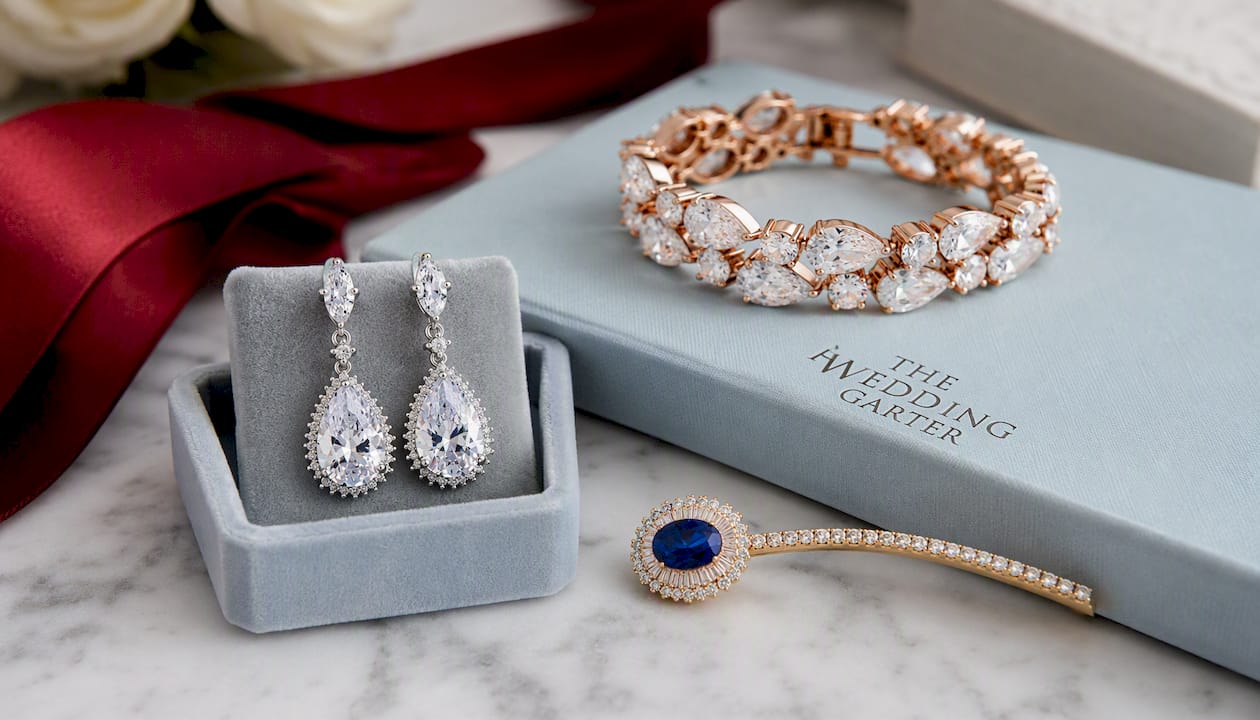
Our Delicate Crystal Luxury Bridal Bracelet is designed to echo whichever accent metal you’ve chosen without introducing a third competing tone, making it an easy repeat piece for the 2:1:1 approach covered above. For brides working with heirloom or vintage-inspired stacks, the Vintage Art Deco Style Bridal Jewellery Set brings the same considered, period-appropriate detailing that pairs naturally with warmer gold tones. If your hairpiece needs to sit alongside a cooler-toned stack, the Large Garden Design Ivory & Silver Bridal Headpiece is a reliable neutral. Every piece ships with our standard returns policy, so you can compare it against your ring stack at home before deciding it’s the one.
Sources
- Bridal Jewelry Metal pairing: How to match metals beautifully | StoneBridge Jewelry
- Here’s how to curate a glam mixed metal wedding set | The Knot
- Mastering the art of mixed-metal jewellery | Michael Hill
- Mixing metals: A guide to combining gold and silver bridal jewellery | Helzberg
FAQ
Is it okay to mix metals in bridal jewellery?
Yes. Mixing metals is completely acceptable, and increasingly popular, as long as you anchor the look with one dominant metal and repeat an accent tone elsewhere in your set.
What is the 2:1:1 rule in jewellery?
The 2:1:1 rule suggests wearing two pieces in your dominant metal for every one piece in your first accent metal and one in a second accent, giving you a balanced but non-uniform look. Treat it as a starting proportion rather than a strict formula.
Can you mix silver and gold jewellery for a wedding?
Yes, silver and gold pair well when one metal dominates and the other appears as a deliberate accent, such as silver earrings against a gold ring stack. Reserve silver for occasional pieces rather than your daily wedding band, since it tarnishes faster than platinum or solid gold.
Which metals should be avoided in bridal jewellery?
No metal is off-limits, but low-quality plated pieces that wear thin quickly are worth avoiding for anything you’ll wear daily, like your wedding band. Choose platinum or solid 14k or 18k gold for pieces that need to withstand everyday wear, and save softer or plated metals for occasional accessories.
How many metals can I mix in one bridal look?
Two metals is the easiest combination to balance, but three works if you control scale carefully and keep one metal clearly dominant. Beyond three, the look tends to read as cluttered rather than intentional.


