

Brides: A Maker's Keepsake Plan to Preserve Your Wedding Garter
The best way to preserve a wedding garter is to hand wash it gently only if it’s soiled, press dry it flat, wrap it in acid-free tissue, and store it in a cool, dark keepsake box or shadow box. Skip harsh detergents, plastic bags, and direct sunlight. Done properly, a handcrafted garter from a maker like The Wedding Garter Australia can stay soft, white, and intact for a lifetime.
TL;DR:
- Using a mild, enzyme-free cleaner and cold water prevents damage and stains from setting on delicate lace or satin garters.
- Flat drying and reshaping while damp help maintain the garter’s shape and prevent elastic creases or fabric distortion over time.
- Wrapping the garter in acid-free tissue and storing it in a breathable bag away from direct sunlight helps preserve its color and elasticity for years.
- A handcrafted garter with sewn embellishments and stable materials lasts longer in storage than mass-produced or glued alternatives.
- Regularly inspecting the elastic, lace, and trims every few years and seeking professional care for repairs protects the garter’s integrity.
Table of Contents
- How do you clean a delicate wedding garter safely?
- How should you dry and reshape a garter before storing it?
- What’s the best way to store a garter right after the wedding?
- Should you use a keepsake box or a shadow box for display?
- How do you know when a garter needs repair or professional care?
- Why a keepsake-first approach protects your garter better
- A short note on keeping this simple
- Choosing a garter built to be kept
- Sources
- FAQ
How do you clean a delicate wedding garter safely?
Most garters don’t need washing at all. If yours came through the day clean, skip straight to drying and storage. But if there’s a makeup smudge, a splash of champagne, or a faint mark from a nervous hand, a careful clean now stops it setting permanently into the lace.
Start by testing your approach before you touch the whole garter.
- Spot-test first. Dab a hidden seam or the underside of a bow with your chosen cleaner and wait five minutes to check for colour bleed or fibre damage.
- Use lukewarm water only. Hot water sets stains and can shrink elastic; cold water often won’t lift oil-based marks like makeup.
- Choose a mild, enzyme-free cleaner. A silk or lace-specific wash, or a tiny amount of pH-neutral soap, is gentler than standard laundry detergent.
- Hand wash without agitation. Submerge, swirl softly, and press the fabric between your palms. Never rub, scrub, or wring.
- Treat stains by blotting, not scrubbing. For makeup, blot with a damp cloth and a dab of mild soap. For blood, use cold water immediately (heat cooks the protein into the fibres) and blot repeatedly until it lifts.
- Rinse until the water runs completely clear. Any leftover soap residue will yellow over time.
Leave out fabric softener and bleach entirely. Softener leaves a film that attracts dust over the years, and bleach is far too aggressive for lace, ribbon, and the tiny stitched embellishments most bridal garters carry.
Pro Tip: Keep a small swatch of leftover trim or lace from your garter’s maker, if you have one. Testing new cleaning products on the swatch instead of the actual garter removes all the guesswork.
How should you dry and reshape a garter before storing it?
Drying is where most home preservation attempts go wrong, usually because people reach for a hairdryer or wring the fabric like a tea towel. Neither is a good idea for lace, satin, or the elastic band holding it all together.
- Press the garter between two clean, dry towels to draw out water, rather than wringing or twisting it.
- Lay it flat on a breathable surface, such as a mesh drying rack or a clean towel, out of direct sun.
- Reshape bows, lace ruffles, and any floral trims while the fabric is still slightly damp. Once fully dry, lace holds whatever shape it dried in.
- Let the elastic relax fully flat before folding it. Folding elastic while it’s still under tension from washing can leave a permanent crease.
- Allow at least 24 hours of air drying in a shaded spot before moving to storage.
Direct sunlight is the enemy here, not just for drying but for the whole life of the garter. UV exposure yellows white satin and weakens elastic fibres over months, not years.
Pro Tip: If your garter has a delicate bow or rosette, prop it gently with a rolled piece of tissue underneath while it dries. That keeps the shape lifted rather than flattened against the drying surface.
What’s the best way to store a garter right after the wedding?
The days right after your wedding are when a garter is most vulnerable. It’s often stuffed into a handbag, a suitcase pocket, or a gift bag alongside everything else, which is exactly how creases, stains, and snags happen before you’ve even thought about long-term preservation.
- Wrap the garter in acid-free tissue paper rather than regular tissue, which can contain acids that yellow fabric over time.
- Place the wrapped garter in a breathable cotton pouch or muslin bag. Avoid sealed plastic bags for anything beyond a day or two, since trapped moisture encourages mould and yellowing.
- Label the package with the wedding date and any cleaning notes, so future-you (or whoever inherits it) knows its history.
- Store it somewhere cool and dry, away from direct sunlight and strong odours like perfume or cigarette smoke, which fabric absorbs easily.
- If you haven’t already, consider using a separate, inexpensive garter for the toss and keeping your special one purely as a keepsake.
That last point matters more than most brides realise before the day, and it’s worth building into your plan from the start.
Should you use a keepsake box or a shadow box for display?
Both work well, and the right choice comes down to whether you want to see the garter often or protect it with minimal handling. A keepsake box is the lower-maintenance option: line it with acid-free tissue, lay the garter flat or loosely coiled, and avoid tight folds that create permanent creases over years of storage.
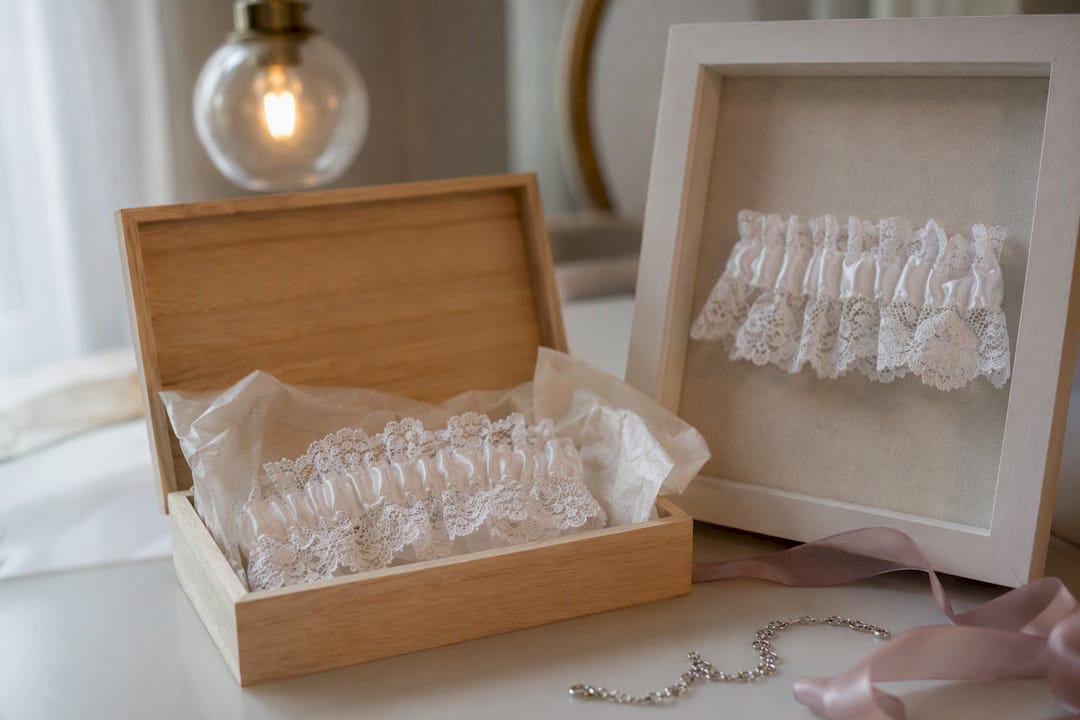
A shadow box gives you a display piece for a bedroom wall or wedding shelf, but mounting matters. Hand stitching the garter to a fabric backing, or using fine museum pins, holds it securely without damaging the fibres. Adhesives are a poor choice, since most glues discolour fabric and degrade over time, and they’re near impossible to remove without tearing lace.
Wherever you land, skip bathrooms, attics, and damp basements. Humidity swings and heat cycles do more damage over a decade than almost anything else.
- Common creative alternatives include mounting the garter as a guest book keepsake, storing it in a dedicated bridal trunk, or sewing it into an anniversary quilt or memory textile.
How do you know when a garter needs repair or professional care?
Elastic and lace age at different speeds, so check both separately every year or two. Yellowing usually shows up first along fold lines, weakened elastic loses its snap rather than snapping outright, and loose beads or sequins tend to work free from the thread before you notice a gap.
- Gentle hand-sewing can reattach a loose bead, sequin, or small trim without needing a full repair job.
- Replacing elastic is possible at home, but only if the outer lace and satin are stable enough to handle the extra handling.
- Call a textile conservator if the garter involves historic or family fabric, has set-in stains you can’t identify, or carries trims too valuable to risk on a DIY fix.
- Store it away from heat and light between checks, since both accelerate the chemical breakdown that causes yellowing.
Pro Tip: Check your stored garter once a year, ideally around your anniversary. Catching a loose thread early is a five-minute fix; catching it five years late usually isn’t.
Why a keepsake-first approach protects your garter better
A handcrafted garter built for keeping, not just wearing, tends to age better than a mass-produced version. Hand-stitched trims, stable satin, and embellishments sewn rather than glued on all hold up far better to years in a box or shadow box. The two-garter strategy (one to toss, one to treasure) is common advice among makers for exactly this reason.
Sellers and specialist garter makers consistently recommend keeping a separate garter for tossing and preserving the handcrafted one as a lasting keepsake, since the throwing garter takes all the rough handling.
Explore more preservation ideas on our blog for keepsake inspiration or browse our garter buying guide for material comparisons.
A short note on keeping this simple
We hear from brides who worry they’ll ruin their garter trying to look after it, and honestly, that fear is bigger than the task itself. A keepsake this small carries a lot of weight. The good news is that small, careful steps, gentle washing only when needed, flat drying, acid-free wrapping, go a long way toward keeping it exactly as it was on the day. If you’re ever unsure about a stain or a fragile trim, reach out to us for tailored advice rather than guessing.
— The Wedding Garter
Choosing a garter built to be kept
Preservation starts before the wedding, with the garter itself. Garters made with hand-stitched trims, stable satin, and sewn-on (never glued) embellishments simply hold up better to years of storage than mass-produced alternatives with fused seams and hot-glued lace.

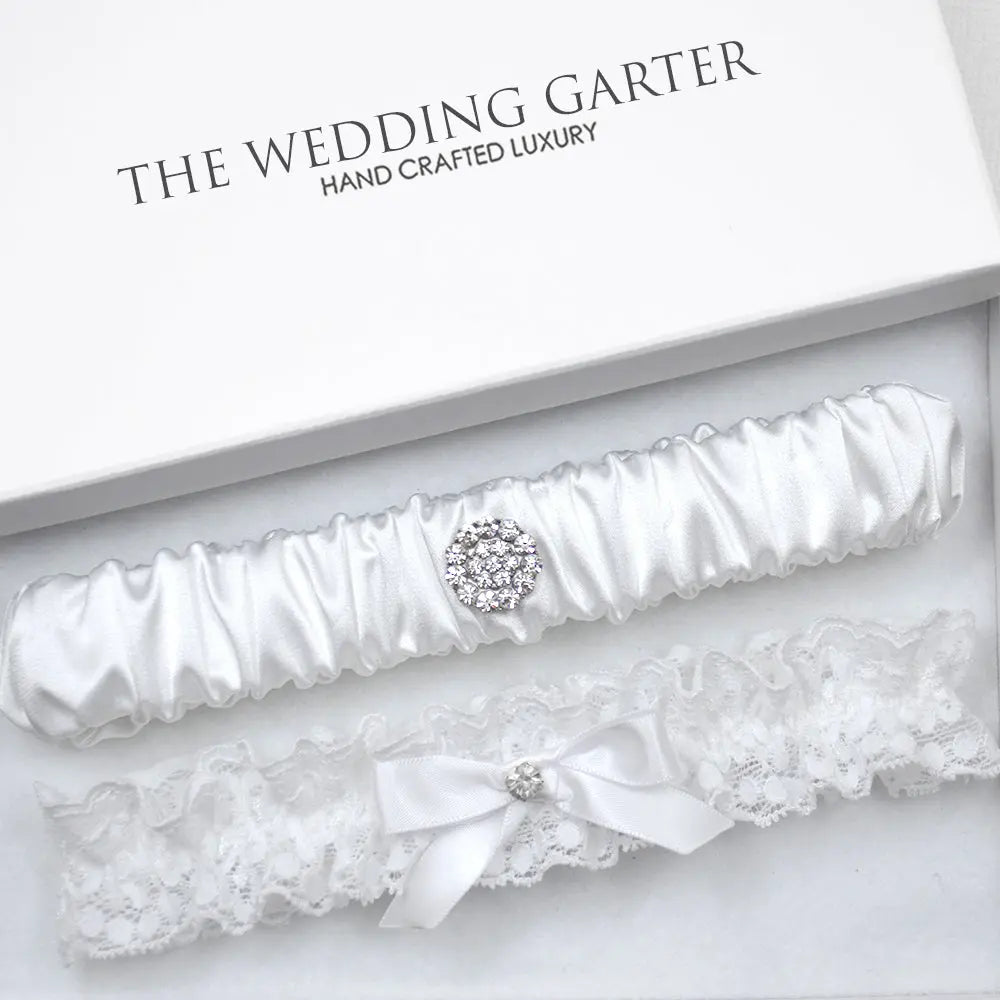
Our Satin Bridal Garter With Floral Design is built with exactly this in mind, finished to handle gentle washing and years in a keepsake box without the seams giving way. If vintage styling is more your taste, the Vintage Ivory Lace & Satin Bridal Garter and the Bridal Garter With White Lace Applique Design are both designed as heirloom pieces from the outset. Pair either with matching pieces from our White Lace Bridal Lingerie Bra & Garterbelt Set or the Luxury White Lace Lingerie Chemise For Brides for a cohesive keepsake set, or finish the look with delicate pieces like the Delicate Crystal Luxury Bridal Bracelet or the Floral Tiffany Style Bridal Jewellery Set. Browse the full garter range or send us a note if you’d like a custom keepsake garter made to preserve for good.
Sources
FAQ
Can you preserve a 30-year-old wedding dress the same way as a garter?
Yes, the same principles apply: gentle cleaning if needed, acid-free tissue, and storage away from light and humidity, though a dress of that age usually benefits from a professional textile conservator’s assessment first.
What is the tradition of taking off the garter at a wedding?
The garter toss dates back centuries as a playful way for the groom to remove and throw the garter to unmarried male guests, echoing older customs where guests once tried to grab a piece of the bride’s attire for luck.
Are garters still a thing for weddings?
Yes, garters remain a popular tradition, though many couples now skip the public toss and instead keep the garter purely as a private keepsake using a two-garter approach.
Why does the groom take the garter off with his teeth?
It’s a playful, theatrical flourish rather than a strict rule, popularised as a crowd-pleasing moment at receptions; plenty of grooms use their hands instead, especially when the bride wants the garter kept intact for preservation.
Which leg should the wedding garter go on?
There’s no fixed rule, but positioning it roughly 2 to 3 inches above the kneecap on either leg is the most comfortable spot and reduces slipping throughout the day.


Leave a comment