

Salon Ready Veil First Method for Brides Wearing a Hairpiece and Veil
Yes, you can wear a veil and hairpiece together, and it works best when one piece leads and the other supports it. Pick your focal piece first, whether that’s a statement comb or a delicate crystal clip, then place the second piece to frame it, not compete with it. For updos, the rule shifts slightly by bun position; for half-up or down styles, placement matters even more. Test both together at your hair trial before deciding.
TL;DR:
- A large, heavy veil requires a structured updo with a sturdy anchor point, while a lightweight birdcage or blusher veil pairs easily with casual or loose styles.
- Matching the material and motif of the veil and hairpiece is essential, with pearls softening photographs and crystals providing a striking, flash-ready effect.
- Proper placement of the veil and hairpiece depends entirely on hairstyle type, with staggering comb positions and securing techniques preventing slippage throughout the day.
- Securing the pieces with the comb flip technique and reinforced bobby pins ensures all-day hold, especially for heavier veils or layered accessories.
- Avoid pairing multiple large, embellished pieces or heavily structured veils with delicate hairpieces, and opt for lighter styles or detachable options in windy outdoor conditions.
Table of Contents
- Choosing veil and hairpiece combinations that balance scale, weight and motif
- [Placement and hairstyle pairings for veils and hairpieces can be referenced in Different Wedding Hairstyles for Any Bride for practical veil placement with various hairstyle types.](#placement-and-hairstyle-pairings-for-veils-and-hairpieces-can-be-referenced-in-different-wedding-hairstyles-for-any-bridehttpsstacyknowscomdifferent-wedding-hairstyles-for-any-bride-for-practical-veil-placement-with-various-hairstyle-types)
- How do you secure a veil and hairpiece so they hold all day?
- When shouldn’t you wear a veil and hairpiece together?
- A stylist’s note on choosing veil and hairpiece together
- A quick trial checklist worth running yourself
- Find the right veil and hairpiece pairing at The Wedding Garter
- Sources
- FAQ
Choosing veil and hairpiece combinations that balance scale, weight and motif
Start with the veil, not the hairpiece. Its length and weight decide what your hairstyle needs to physically support, and that in turn decides what hairpiece will sit comfortably alongside it. A cathedral veil demands a structured updo, like a low chignon or braided bun, because the fabric’s weight needs a solid anchor point. A birdcage or blusher veil, by contrast, sits light enough to pair with almost any hairstyle, including loose waves.
Once the veil is settled, match the hairpiece to what the veil isn’t already doing visually.
- A bold tiara pairs best with a simple, unadorned veil so the two don’t fight for attention.
- A heavily embroidered or lace-edged veil calls for a minimal hairpiece, like a single pearl pin or a slim crystal comb.
- Delicate pieces such as a crystal hair clip work well tucked near the veil’s anchor point rather than as a separate focal moment.
- Flower crowns suit shorter veils and casual or outdoor ceremonies more than formal cathedral lengths.
Material matching matters more than most brides expect. Pearls photograph softly and diffuse light, crystals catch flash photography and can look harsher in candid shots, and lace motifs need to echo (not clash with) the lace on your gown. Venue and weather should also steer your final call: outdoor and coastal ceremonies favour lighter veil fabrics and extra securing points to handle breeze, a point echoed in bridal styling coverage from Vogue.
Pro Tip: Lay your veil and hairpiece side by side on a flat surface before your trial. If they’re visually competing there, they’ll compete on your head too.
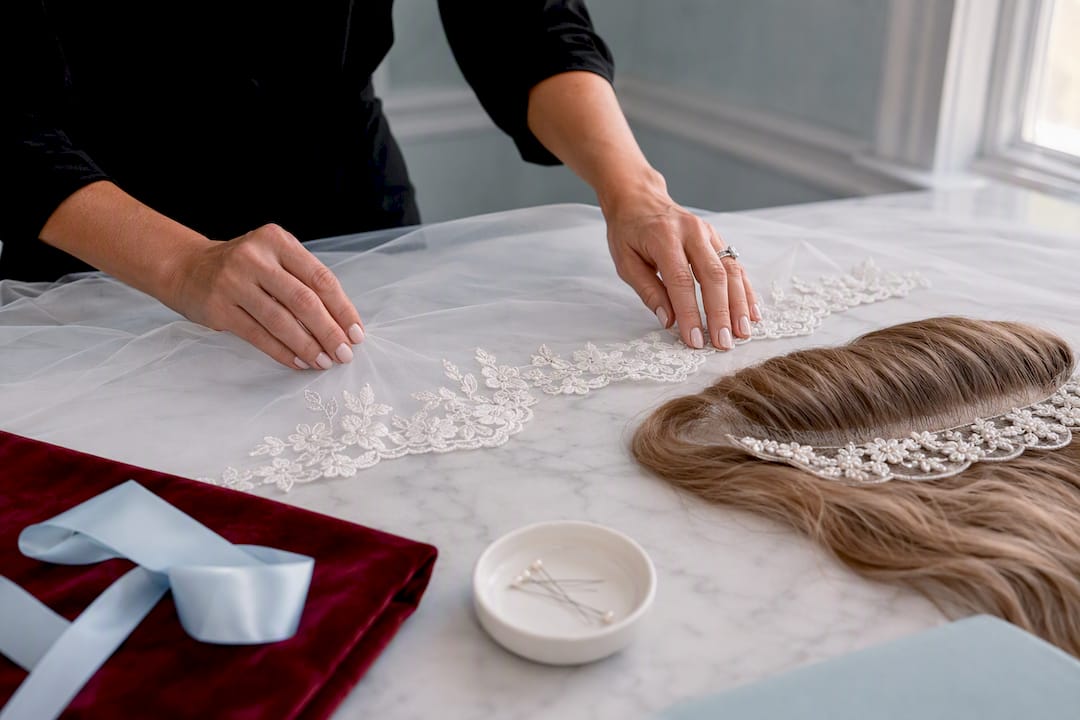
Placement and hairstyle pairings for veils and hairpieces can be referenced in Different Wedding Hairstyles for Any Bride for practical veil placement with various hairstyle types.
Where you clip each piece depends entirely on your hairstyle, and small adjustments make a big visual difference.
- Updos: clip the veil above the bun to lift the silhouette and create height, or attach it underneath the bun so the veil reads as an extension of the hairstyle while the hairpiece stays the visible focus. Choosing between the two comes down to whether you want the veil or the headpiece doing the visual work.
- Half-up and down styles: position the veil comb at the crown and let a decorative barrette or comb sit just in front of it, slightly offset, so both pieces stay visible without stacking directly on top of one another.
- Loose or short hair: without an updo’s structure to anchor combs, you’ll need extra reinforcement. A mantilla veil or birdcage style anchored with bobby pins in an X pattern, or a clip-in extension for extra grip, gives combs something to hold onto, as WeddingWire’s styling guidance confirms.
- Braids and textured styles: tuck combs into the braid’s structure itself, ideally where two braid sections cross, rather than resting them on top of smooth hair where they can slip and snag the tulle.
A common mistake is placing a decorative comb directly where the veil comb sits, which causes both to compete for the same patch of hair and increases the chance of slippage. Staggering the two, even by a few centimetres, solves this instantly.
Pro Tip: Ask your stylist to take a photo from directly behind your head once both pieces are in. Mirrors don’t show you what your guests will see during the ceremony.
How do you secure a veil and hairpiece so they hold all day?
The comb flip is the single most important technique in bridal hairstyling, and it’s worth understanding properly. Insert the veil comb with the teeth pointing towards your face, then flip the entire comb backwards so it follows the curve of your head. This flip is what locks the teeth against the scalp rather than letting them sit loosely on the surface, and it’s the technique The Knot’s styling experts recommend for long or heavy veils specifically.
When you’re layering two combed pieces, a split comb or a sewn-in comb attachment lets you separate the load across more hair rather than cramming two full combs into one small section. One detail few brides are told: orient each comb in opposite directions, one angled slightly forward and one slightly backward, which creates opposing tension that genuinely improves hold rather than letting both combs slide the same way under movement.
Bobby pins reinforce whatever the combs can’t hold alone.
- Use an X pattern over each comb for maximum grip on fine or slippery hair.
- Use parallel pins along the veil’s base seam for lighter veils that just need light stabilising.
- Use a crossing pattern radiating from the comb when securing into braids or textured updos.
A light grip spray, a couple of clear elastics wound through the base of a bun, and small sewn-in loops in your headpiece all add extra insurance. None of these tricks are complicated, but stylists who skip them are the ones you hear about mid-reception, holding a veil back on with sheer willpower.
When shouldn’t you wear a veil and hairpiece together?
Sometimes the honest answer is: don’t. A few signals tell you the pairing isn’t working before you even walk down the aisle.
- Two large, heavily embellished pieces (a big tiara plus a dense lace veil) almost always read as cluttered in photos.
- A heavy cathedral veil paired with a delicate, fine hairpiece often lets the veil visually swallow the smaller piece entirely.
- Short hair without an updo can struggle to hold both a comb and a veil securely, particularly through a full day of movement.
Quick fixes exist for most of these problems. Swap to a detachable blusher veil for photos only, add one small anchor comb near the nape for extra hold, or choose a lighter veil fabric that won’t overwhelm a delicate hairpiece. Short hair works well with a mantilla-style attachment or a birdcage veil clipped close to the head, both of which need less structural support than a full-length veil. For wind or humidity, rehearse the look beforehand and keep spare pins on hand, since outdoor conditions change how veils sit far more than most brides expect.
A stylist’s note on choosing veil and hairpiece together
We tell every bride the same thing: pick your veil first, because its weight and length dictate everything else, including whether your hairpiece needs to be a supporting whisper or a genuine second statement. When you’re browsing, prioritise comb quality, overall weight, and a motif that echoes rather than repeats your veil’s detailing. Run two tests at your trial: a movement test (walk, sit, turn your head) and a straight comparison of photos with the veil on and off. Our collection of bridal headpieces is built from exactly this kind of practical, salon-informed thinking, not just what looks good on a stand.
A quick trial checklist worth running yourself
Ask your stylist for three things: a photo of the placement from behind, a full movement test, and a spare pin or two tucked away for emergencies. Avoid piling too much at the crown; it’s the fastest way to look cluttered. And always check how it all looks in motion, not just standing still.
— The Wedding Garter
Find the right veil and hairpiece pairing at The Wedding Garter
The Wedding Garter Australia gives you what a generic accessories aisle can’t: pieces designed specifically to pair with veils, not compete against them, backed by people who understand comb weight and placement, not just aesthetics.
If your veil calls for sparkle without bulk, our Classic Vintage Crystal Wedding Hair Accessories sit beautifully against most veil styles without adding visual weight. For half-up or down looks, the Delicate Crystal Luxury Bridal Hair Clip gives you sparkle with a light, low-slip fit. Brides after a stronger statement piece, best matched with a simpler veil per the balance principle above, should look at our Large Garden Design Ivory & Silver Bridal Headpiece. Once your headpiece is sorted, our Vintage Art Deco Style Bridal Jewellery Set and Delicate Crystal Luxury Bridal Bracelet round out the same crystal or pearl motif from head to hand.
Every piece is handmade with genuine craftsmanship and shipped from our home on the Gold Coast, backed by a straightforward returns policy if it’s not quite right. Browse the full range or reach out for personal styling advice before your trial.
Sources
- 30 ways to wear your wedding hair with a veil | The Knot
- 29 wedding hairstyles with a veil | Vogue
- Veil and hairstyle pairings | WeddingWire
FAQ
Can you wear a hairpiece and a veil at the same time?
Yes. The key is choosing one piece as the visual focus and positioning the other to support it, whether that means a simple tiara under a plain veil or a delicate comb offset from a lace-edged one.
What hairstyle works best with a veil?
Structured updos like low chignons or braided buns work best with long or heavy veils because they give combs a sturdy anchor, while loose or half-up styles suit lighter veils better, according to The Knot’s styling guidance.
When should you not wear a veil?
Skip the veil, or switch to a detachable blusher style, if your hairpiece is already a bold statement piece, if the venue is extremely windy, or if you want a distinctly different look for the reception once photos are done.
How do you wear a veil with short hair?
Short hair usually needs extra anchoring since there’s no updo structure to hold a comb on its own. A mantilla attachment, a birdcage veil clipped close to the head, or a discreet clip-in extension, as noted in WeddingWire’s pairing guide, all give combs something secure to grip.


