

Make It a Keepsake: Blue Garter Meaning for Brides
A blue garter is the bride’s most traditional way to wear “something blue” on her wedding day, symbolising fidelity, loyalty and good fortune in marriage. It comes from the centuries-old rhyme that lists the four charms a bride should carry, and because a garter sits hidden under the dress, it stays a private, personal keepsake rather than a visible accessory. Bridal accessory retailers work with brides on exactly this kind of detail.
TL;DR:
- The shade of blue selected for the garter influences the overall mood, with pastel blues offering romance and navy or royal blue conveying boldness.
- Brides typically wear the garter just above the knee on either leg, ensuring it fits comfortably with their wedding shoes and dress style.
- Wearing two garters allows one to be kept as a keepsake while the other is used for the toss, with many opting to skip the toss entirely or make it a private moment.
- The tradition originated from practical medieval garters that held up stockings, evolving into a symbolic private keepsake in Victorian wedding customs.
- Perfect matching sets or simple satin options are recommended for a traditional, versatile “something blue” that can be easily coordinated with the wedding attire.
Table of Contents
- Blue garter meaning: what the colour represents and why a garter carries it
- How did the garter tradition start?
- Why is blue specifically tied to the wedding rhyme?
- How should you wear a blue garter, and what about the toss?
- Choosing the right blue garter: materials, shades and finishing touches
- Publisher expertise: sourcing your something blue
- Does blue garter meaning change around the world?
- How has the blue garter shown up in books, film and TV?
- Our take: the symbolism matters more than the ritual
- Buy blue garters: featured pieces to complete your something blue
- Sources
- FAQ
Blue garter meaning: what the colour represents and why a garter carries it
Blue has stood for faithfulness, constancy and protection in Western bridal custom for generations, long before anyone wrote it into a rhyme. Brides adopted it as a quiet counterweight to the white of the dress, a colour meant to promise loyalty rather than purity.
A garter is a natural home for that symbolism because nobody sees it. Unlike a blue ribbon woven into a bouquet or a sash on the dress, a blue wedding garter stays tucked away, worn against the skin, known only to the bride (and, eventually, her groom). That privacy is the point. It turns a fashion detail into a personal ritual, something worn rather than displayed, and it becomes a keepsake long after the reception ends.
The shade you choose changes the tone of that symbolism. A soft powder blue reads as gentle and romantic, closer to a whisper than a statement. A saturated royal or navy blue feels more deliberate, almost bold, especially against ivory or champagne lace. Neither is more “correct”. The meaning of blue garter choices is really about matching colour intensity to the mood you want the tradition to carry.
How did the garter tradition start?
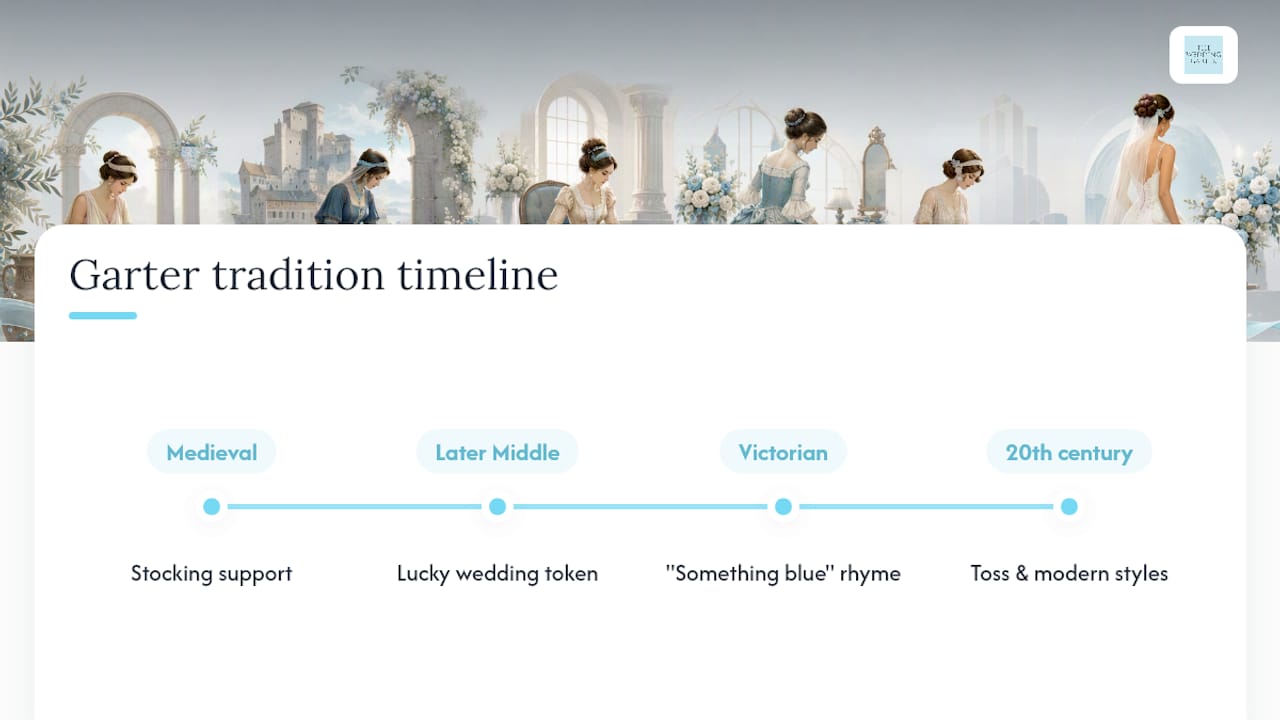
The garter’s story starts as something entirely practical. In medieval Europe, a garter was simply a strip of fabric or ribbon tied above or below the knee to hold up stockings before elastic existed. It had no romantic weight at all until wedding guests began treating it as a lucky token, sometimes fighting over a piece of the bride’s clothing as she left the ceremony, which is a large part of why the modern, more controlled version of the tradition exists.
The Victorian era is where things consolidated into something closer to what brides do today. This period popularised the rhyme “something old, something new, something borrowed, something blue, and a sixpence in her shoe,” according to wedding history explainers, which gave the garter a clear symbolic assignment rather than a purely decorative one. Blue became the obvious colour to fulfil the fourth line, and the garter became the obvious place to wear it without disrupting the bride’s visible styling.
The 20th century brought the parts most people recognise now: the garter toss, the playful removal by the groom, and eventually the softer alternatives couples use today. Fashion also crept in, with lace, embroidery and embellishment turning a hidden practical item into something brides now choose as carefully as their shoes or jewellery.
Why is blue specifically tied to the wedding rhyme?
The rhyme itself is the most direct answer, but it’s not the only root worth knowing. Some cultural historians trace blue’s prominence in bridal symbolism further back, connecting it to earlier religious art and folk protection motifs rather than treating the Victorian rhyme as the whole story, according to research into the “something blue” myth. Blue’s long association with the Virgin Mary in Western art gave the colour an existing reputation for purity and devotion well before it landed in a wedding rhyme.
A garter fulfils that tradition without asking a bride to change anything visible about her dress, shoes or jewellery. That’s a practical strength as much as a symbolic one: brides who want the tradition honoured, but don’t want blue anywhere near their bouquet or gown, get exactly what they need from a single hidden accessory.
How should you wear a blue garter, and what about the toss?
Most brides wear the garter just above the knee on either leg, whichever feels more secure and comfortable under the dress fabric you’ve chosen. A few practical steps make the day easier:
- Try the garter on with your actual wedding shoes and dress at a fitting, not in isolation, since heel height changes where it sits comfortably.
- Choose a size with enough stretch to stay put through dancing, sitting and photos, without leaving marks.
- If you’re wearing two garters, decide in advance which one is the keepsake and which is the toss garter, so there’s no scramble on the day.
Wearing two garters is common precisely for that reason: one stays with the bride as a sentimental keepsake, the other goes to the groom for the toss, according to modern wedding etiquette coverage. If a public toss doesn’t suit your reception, plenty of couples now skip it in favour of a private moment between just the two of you, or a symbolic ribbon pull done off to the side rather than in front of the whole room.
Choosing the right blue garter: materials, shades and finishing touches
Material changes both comfort and look. A few common options:
- Satin gives a smooth, structured finish and tends to hold its shape well through a long reception.
- Lace adds texture and a more romantic, vintage feel, and layers nicely over a satin base.
- Tulle is lighter and softer, better suited to brides who want minimal fabric bulk under a fitted dress.
Shade matters just as much as fabric. Pale and dusty blues suit a softer, romantic styling; royal blue or navy suits brides who want the “something blue” detail to feel more intentional. Embellishments like CZ diamond accents, ribbon trim or embroidered initials also lift a simple garter into a keepsake worth keeping in a memory box, according to buying guides on garter styles.
Publisher expertise: sourcing your something blue
The Wedding Garter Australia has built dedicated buying guides around exactly this decision, including a detailed something blue accessories guide and a broader explainer on wedding garter meaning. Each featured garter style serves the tradition differently: a simple satin piece works as an understated keepsake, an embellished garter doubles as a statement piece, and a paired set solves the keep/toss question in one purchase.
Pro Tip: If you’re choosing between one garter or two, buy a matching set rather than mismatching styles, so the toss garter still looks intentional in photos before it comes off.
Does blue garter meaning change around the world?
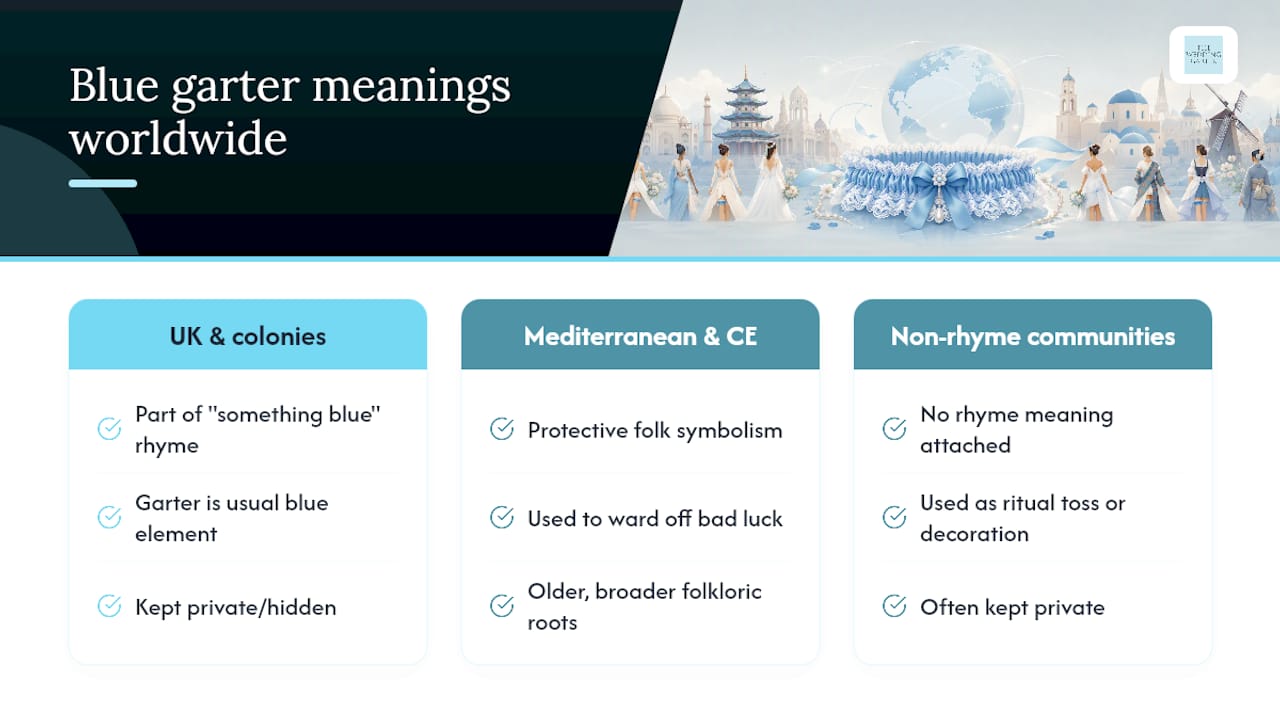
The rhyme itself is largely an English-language, Western European tradition, but “something blue” ideas show up in adapted forms elsewhere. In parts of the United Kingdom and its former colonies, including Australia, the rhyme travelled almost intact, and the garter remains the most common vehicle for the blue element specifically because it stays hidden.
In some Mediterranean and Central European wedding customs, blue carries protective folk meaning independent of the English rhyme, tied to warding off bad luck rather than promising fidelity. That protective thread lines up with the folklore research into “something blue” traditions, which treats the colour’s bridal use as older and broader than any single rhyme.
Communities that don’t observe the rhyme at all often still borrow the garter as a fun ritual moment rather than a symbolic one, stripped of its “something blue” meaning and kept purely for the toss. That’s worth knowing if you’re planning an intercultural or blended wedding: the garter can be as symbolic or as purely decorative as you decide, and neither reading is wrong. What stays consistent almost everywhere the tradition appears is the private placement, which keeps the detail personal no matter which meaning a couple attaches to it.
How has the blue garter shown up in books, film and TV?
Wedding scenes in film and television lean on the garter toss constantly, almost always for comic or slightly awkward effect, the groom fumbling under the dress while guests cheer. That version of the garter has drifted a long way from its symbolic origin and become shorthand for the reception’s lighter, more chaotic moment rather than any reference to fidelity or luck.
Bridal literature and lifestyle writing tend to treat the garter differently, usually returning to its role in the “something blue” rhyme rather than the toss. Wedding planning guides and bridal magazines regularly frame the garter as the rhyme’s easiest line to fulfil, precisely because it asks nothing of the bride’s visible styling.
The gap between those two portrayals says something real about where the garter sits culturally now. Popular media keeps the toss alive as entertainment, while bridal culture and editorial writing keep the symbolism alive as tradition, and most modern brides end up drawing from both: a garter worn for its private meaning, tossed (or not) for the fun of the moment.
Our take: the symbolism matters more than the ritual
The conventional advice on blue garters spends most of its energy on the toss: how to do it, whether to skip it, what’s appropriate for a modern reception. That’s the least interesting part of the tradition. The actual symbolism, a private, colour coded promise of fidelity, deserves more attention than the five minutes of reception choreography built around removing it.
What we’d prioritise differently: pick the shade and style that means something to you before worrying about whether you’ll toss it publicly. A pale blue lace garter chosen because it matches your grandmother’s wedding photo carries more weight than any decision about reception etiquette. The etiquette question is genuinely optional. The symbolism isn’t, if the tradition matters to you at all.
Brides get this backwards more often than not, treating the garter as a prop for one reception moment instead of a keepsake that outlasts the day entirely.
— The Wedding Garter
Buy blue garters: featured pieces to complete your something blue
Some retailers offer a straightforward option for “something blue” with garters designed to fulfil the tradition. These garters may be handmade rather than mass produced.
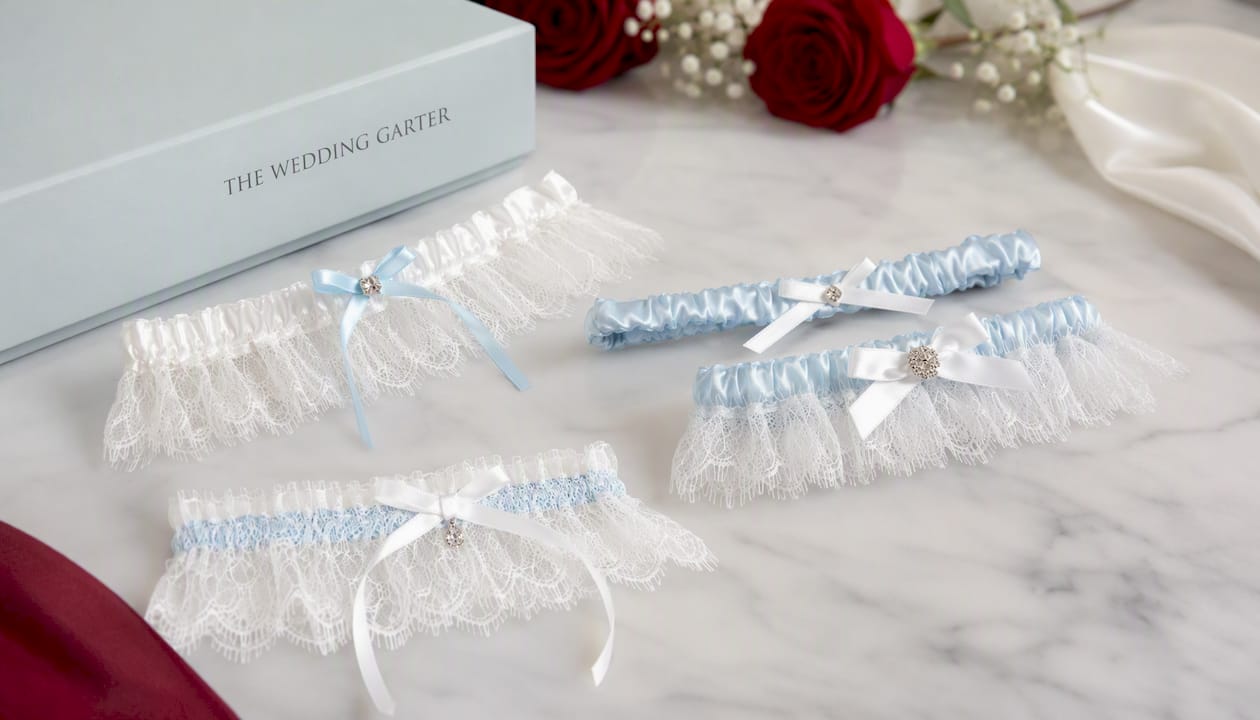
The Something Blue White Satin Eyelash Lace Wedding Garter suits brides who want a clean, classic look that works as either a keepsake or a toss garter without drawing attention under the dress. For couples who want the keep/toss decision solved in one purchase, the Penelope Blue Wedding Garter Set For Something Blue comes as a matched pair, so nothing gets mismatched on the day. Brides after a more decorative keepsake should look at the Something Blue Bridal Garter With CZ Diamond, which adds sparkle without losing the garter’s hidden, personal role.
The Wedding Garter Australia offers free shipping over $100 and hassle-free 30-day returns, as stated on the full garter and accessories range. If you’re building out the rest of your bridal look at the same time, the bridal accessories collection and bridal jewellery range are worth browsing before you check out. Pick your garter, add it to your order, and have your “something blue” sorted before your next fitting.
Sources
- Blue Wedding Garter: Meaning & Something Blue Ideas
- Wedding Garter Toss Tradition, History and Significance …
- What Is a Wedding Garter?
FAQ
Why do brides wear a blue garter?
Brides wear a blue garter to fulfil the “something blue” line of the traditional wedding rhyme, which symbolises fidelity, loyalty and good fortune. Because the garter is worn under the dress, it lets brides honour the custom without changing anything visible about their outfit.
What colour garter should a bride wear?
Any colour works, but blue is the most traditional choice because it directly answers the “something blue” rhyme. Brides who don’t feel tied to the rhyme often choose white, ivory or a colour that matches their dress or wedding palette instead.
What does a garter symbolise?
A garter historically symbolised luck and, once linked to the Victorian rhyme, came to represent fidelity and constancy in marriage specifically through its blue colouring. Its hidden placement also gave it a role as a private keepsake rather than a purely decorative item.
Why do brides wear two garters?
Many brides wear two garters so one can be kept as a sentimental keepsake while the other is removed for the public garter toss. This avoids the awkward choice of tossing the only garter you actually want to keep, and it’s a practice The Wedding Garter Australia’s Penelope set is designed around directly.


Leave a comment