

Ring bearer pillow size: what couples need to know
The standard finished size for a ring bearer pillow is traditionally a square size suitable for most weddings. If your ring bearer is a toddler, go smaller. If the design is elaborate or the child is older, go larger.
Common finished sizes for ring bearer pillows are most often 5 × 5, 6 × 6, 8 × 8 (traditional), 9 × 9, and 10 × 10 inches. The 8 × 8 inch size is regarded as the classic standard for most weddings.
Table of Contents
- What are the standard ring bearer pillow sizes?
- How do you pick the right size for your ring bearer?
- DIY cutting dimensions and seam allowance basics
- How to attach the rings securely
- When should you skip the pillow altogether?
- Key takeaways
- Why size-by-age guidance matters more than tradition
- Ring bearer pillows from The Wedding Garter Australia
- Useful sources
- FAQ
What are the standard ring bearer pillow sizes?
Ring bearer pillows are almost always square. The traditional 8 × 8 inch shape became the default because it sits comfortably in a child’s hands without being cumbersome, and it photographs well at most ceremony scales.
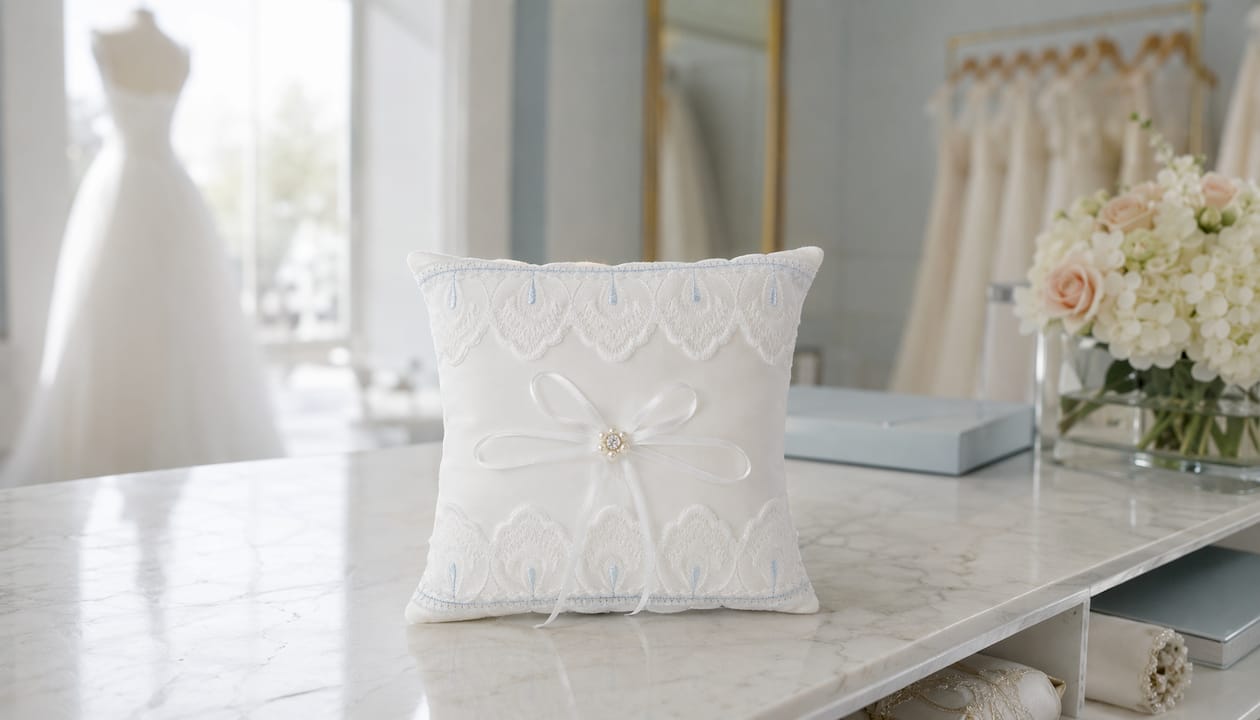
| Finished size | Best suited for |
|---|---|
| 5 × 5, 6 × 6 in | Display, novelty, very small hands or toddlers |
| 8 × 8 in | Children aged 4–8 or most ring bearers (standard) |
| 9 × 9, 10 × 10 in | Older children or elaborate designs |
A few things worth knowing before you order:
- Small (5–6 in): lightweight and easy to grip; limited space for decorative embellishment
- Medium (8 in): the most widely stocked and traditional size; works with ribbons, lace, and pearl trim
- Large (9–10 in): more canvas for intricate detail, but heavier for a small child to carry
One detail that catches buyers off guard: decorative edging can increase the visible outer dimensions beyond the listed finished measurement. A pillow listed as 8 × 8 inches may appear larger once lace trim or a ruffled border is added. Always ask whether a retailer’s dimensions refer to the inner usable area or the full outer measurement including trim. The White Lace Bridal Pillow For Rings is a good example of a lace-trimmed style where this distinction matters.
How do you pick the right size for your ring bearer?
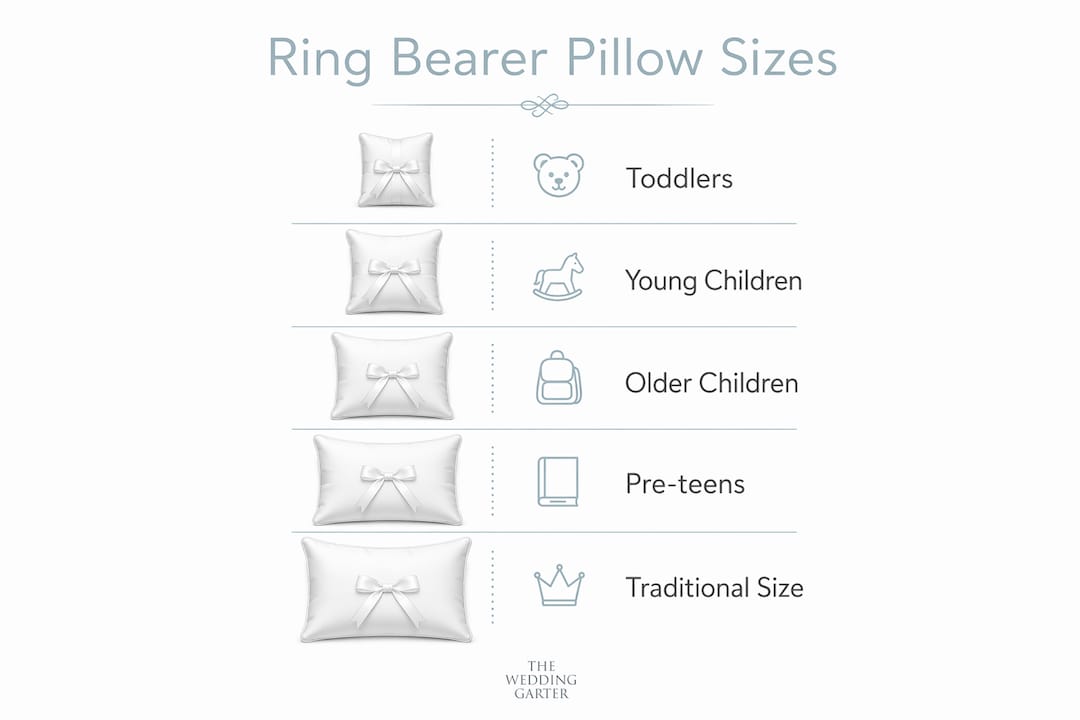
Age and hand size are the primary factors. A 6 × 6 inch pillow suits a toddler or young child; an 8 × 8 inch pillow suits most ring bearers, particularly those who are a bit older and steadier on their feet.
Toddlers (under 4 years): Small hands struggle with anything wider than about 15 cm. A 6 × 6 inch pillow keeps the load light and the grip natural. Photographers also prefer this proportion because the pillow does not dwarf the child in frame.

Children aged 4–8: The 8 × 8 inch standard works well. The child can hold it with both hands underneath, and the pillow reads clearly in ceremony photos without overpowering the shot.
Older children or pre-teens: A 9 × 9 or 10 × 10 inch pillow is manageable and allows for more decorative detail if the wedding style calls for it.
Photography proportionality matters more than many couples expect. An oversized pillow on a small child tends to draw the eye away from the rings and toward the awkward carry. When in doubt, size down rather than up.
Pro Tip: Ask your photographer whether they prefer a particular size for the procession shots. Some photographers suggest smaller sizes for toddlers to keep good visual proportion.
Aisle length and rehearsal time also play a role. A longer procession means more time carrying the pillow, so lighter is better. If the child has not rehearsed, a smaller, lighter pillow reduces the chance of a fumble.
DIY cutting dimensions and seam allowance basics
The rule is straightforward: add ½ inch (≈1.3 cm) to each side of your desired finished size when cutting. That gives you the seam allowance on all four edges.
For an 8 × 8 inch finished pillow, cut two 10 × 10 inch fabric squares to allow for a 1/2-inch seam allowance on each side. Add a 1/2-inch seam allowance to each side for other finished sizes (e.g., for a 6 × 6 inch pillow, cut two 7 × 7 inch squares).
- Cut two fabric squares to the cutting dimensions above.
- Place the pieces right sides together and pin around all four edges.
- Sew three full sides and most of the fourth, leaving a 5–6 cm gap for turning.
- Clip the corners diagonally to reduce bulk, then turn right side out.
- Press flat with an iron, pushing the corners out fully.
- Fill with lightweight polyester stuffing until the pillow is firm but not rigid.
- Hand-stitch the opening closed with a slip stitch.
- Attach ribbon ties, a loop, or a small pocket for the rings before the final closure.
Material notes:
- Satin and silk photograph beautifully but can be slippery to sew; use sharp pins and a fine needle.
- Lace overlay adds texture without much weight.
- Polyester stuffing keeps the pillow light, which matters for a young child carrying it down the aisle.
Pro Tip: Sew a 5 cm wide ribbon loop to the underside of the pillow before closing it. A child can slip a hand under this strap, which keeps the pillow level and reduces the chance of it being dropped.
How to attach the rings securely
The rings are the point of the whole exercise, so how you secure them matters. Common attachment methods each have trade-offs.
- Ribbon ties: Two short lengths of ribbon sewn to the pillow centre, tied in a bow over the rings. Easy to untie at the altar; the most traditional look. Tie them firmly but not so tight that the officiant struggles.
- Looped cord or elastic loop: A small loop that the ring slides through. More secure than a bow, but can be fiddly to remove quickly during the ceremony.
- Shallow pocket or snap pouch: A small fabric pocket sewn onto the pillow surface. Rings sit inside and cannot roll off. Best for outdoor or windy venues where a bow might loosen.
- Velcro tab: Quick to open, but the tearing sound during the ceremony can be distracting.
Safety checklist for the wedding day:
- Tie the rings to the pillow at least twice before the procession begins.
- Rehearse with the child so they know to hold the pillow flat with both hands.
- Consider placing faux or replica rings on the pillow for the walk; keep the real rings with the best man or maid of honour until the moment of exchange.
- Check the ties immediately before the procession, not hours earlier.
Pro Tip: If you use ribbon ties, choose a width of at least 1 cm so the bow holds its shape under the weight of the rings. Very narrow ribbon tends to slip.
When should you skip the pillow altogether?
Skipping the ring pillow is increasingly common, and there are good reasons to consider an alternative depending on your ceremony.
- Ring box: Hinged, secure, and easy to carry. Ideal for outdoor or windy venues where a ribbon bow might come undone. A wooden or velvet box also photographs well and doubles as a keepsake.
- Small decorative tray or dish: Works for styled or editorial ceremonies. Less secure than a box; best for indoor venues with a short aisle.
- Decorative shell or natural vessel: Suits beach or coastal weddings. Rings sit inside naturally; lightweight and thematic.
- Wrist pillow: A small cushion attached to a ribbon worn around the child’s wrist. Frees up both hands and reduces the chance of dropping.
- Best man or maid of honour carries the rings: The simplest option. Removes the child from the equation entirely, which suits very young or anxious ring bearers.
When to choose an alternative:
- The ring bearer is under three years old and unlikely to walk the aisle reliably.
- The venue is outdoors with wind or uneven ground.
- The ceremony has a religious or cultural format where a pillow is not traditional.
- The couple prefers a minimalist aesthetic without props.
For more creative ideas around ceremony accessories and keepsakes, the garter keepsake guide at The Wedding Garter Australia covers alternative presentation ideas worth considering alongside the ring pillow decision.
Key takeaways
The most practical rule: choose smaller pillows for toddlers, a traditional medium size for most ring bearers, and larger sizes for older children or ornate designs.
| Point | Details |
|---|---|
| Standard finished size | 8 × 8 in (20 × 20 cm) is the traditional standard and suits most ring bearers. |
| Size by age | Use 6 × 6 in for toddlers, 8 × 8 in for children aged 4–8 (the classic age range for most ring bearers), and 9 × 9 or 10 × 10 in for older children. |
| DIY seam allowance | Add ½ in (≈1.3 cm) to each side; an 8 × 8 in finished pillow requires two 10 × 10 in cut pieces. |
| Ring security | Tie rings with ribbon twice; use faux rings for the walk and keep real rings with an adult. |
| The Wedding Garter Australia | Offers the Ivory Lace & Satin Pearl, Satin White, and White Lace Bridal Pillow in standard sizes, available to Australian buyers online. |
Why size-by-age guidance matters more than tradition
The 8 × 8 inch standard exists for good reason, but it was not designed with toddlers in mind. A two-year-old carrying a 20 cm square pillow down a long aisle is a recipe for a fumble, a dropped ring, and a stressed child. The tradition of the ring bearer pillow is charming; the execution needs to be practical.
At The Wedding Garter Australia, the consistent observation across bridal accessory guidance is that couples who choose a pillow sized to the child, rather than to convention, have smoother ceremonies. A 6 × 6 inch pillow on a small child looks intentional and proportional in photographs. An 8 × 8 inch pillow on the same child looks like an afterthought.
Custom sizing and lightweight construction are not premium extras. They are the difference between a moment that works and one that requires intervention at the altar. The underslung hand strap, the faux ring on the walk, the rehearsal the day before: these small decisions matter far more than the fabric choice or the lace trim.
Ring bearer pillows from The Wedding Garter Australia
Choosing the right pillow is straightforward when the options are clear and sized correctly. The Wedding Garter Australia stocks a curated range of ring bearer pillows for Australian brides, available online with standard sizing and the option to enquire about custom dimensions.
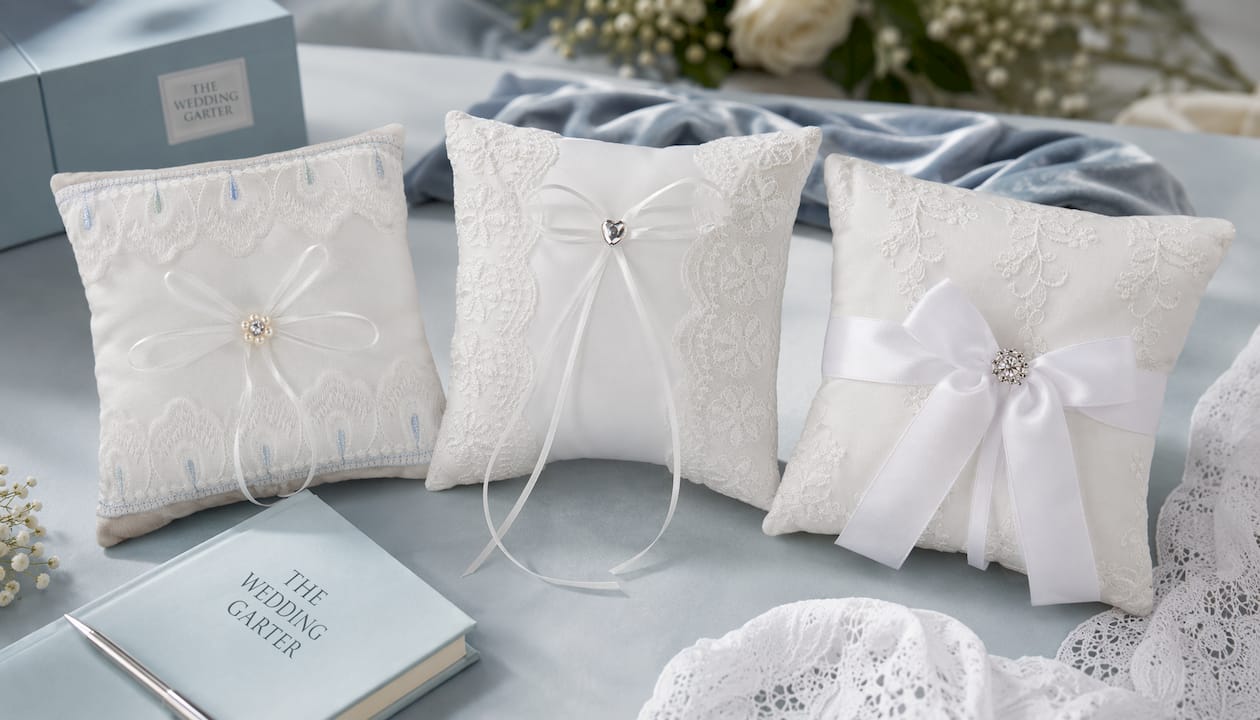
Three styles are available now:
- The Ivory Lace & Satin Pearl Ring Bearer Pillow combines delicate lace with pearl detailing for a classic bridal look.
- The Satin White Ring Pillow is a clean, traditional option suited to the standard 8 × 8 inch format.
- The White Lace Bridal Pillow For Rings features lace trim; check inner versus outer dimensions when ordering to confirm the usable ring area.
All three ship to Australian addresses. For matching bridal accessories or to enquire about a custom size, visit The Wedding Garter Australia online or contact the team directly through the store.
Useful sources
| Source | What it covers |
|---|---|
| ShunBridal: What size should a wedding ring pillow be? | Size-by-age guidance and size chart for small, medium, and large pillows |
| ShunBridal: How big is a ring bearer pillow? | Original 8 × 8 in standard and variant sizes |
| ShunBridal: How to make a ring bearer pillow | Cutting dimensions and seam allowance for DIY pillows |
| The Knot: Wedding ring pillows | Age-based selection guidance and alternatives to pillows |
| wikiHow: How to make a ring pillow | Seam allowance rule and sewing steps |
| The Robin’s Nest Embroidery: Ring bearer pillow | Inner vs outer dimension distinction for retail listings |
For inch-to-centimetre conversions, any standard metric conversion tool will confirm the figures listed in this guide. When ordering a custom pillow, always specify whether your stated dimensions are the finished inner size or the full outer size including decorative edging.
FAQ
How big should a ring bearer pillow be?
The traditional size is 8 × 8 inches (20 × 20 cm), which suits most ring bearers. For toddlers, a 6 × 6 inch pillow is more manageable.
Do people still use ring bearer pillows?
Yes, though alternatives like ring boxes and decorative shells are increasingly popular. A pillow remains the most recognisable and widely used option for traditional Western ceremonies.
How do you make your own ring bearer pillow?
Cut two fabric squares 1 inch larger than your desired finished size (to allow a ½-inch seam allowance on each side), sew three sides and most of the fourth, turn right side out, stuff lightly, and close the gap by hand. The ring bearer pillow buying guide at The Wedding Garter Australia covers style and material choices in more detail.
What can you use instead of a ring bearer pillow?
Common alternatives include a hinged ring box, a small decorative tray, a shell, a wrist pillow, or simply having the best man or maid of honour carry the rings. A ring box is the most secure option for outdoor or windy venues.
Recommended
- The Ultimate Ring Bearer Pillow Buying Guide: Find the Perfect One for – The Wedding Garter
- The Ultimate Plus Size Wedding Garter Buying Guide: Find Your Perfect – The Wedding Garter
- How to Measure for a Wedding Garter: Your Guide to the Perfect Fit - – The Wedding Garter
- Ultimate Wedding Garters Buying Guide for Your Dream Day in 2026 - – The Wedding Garter


